AI Ethics in Mexico: Regulations & Best Practices for Devs
Stay ahead in the rapidly evolving AI landscape. This post covers the latest in AI ethics in Mexico, focusing on emerging regulations and essential best practices for Mexican developers to ensure responsible and fair AI development.
By: Michael Sete on agosto 14, 2026
The field of artificial intelligence is moving incredibly fast, bringing both amazing opportunities and complex challenges. For Mexican developers, understanding the nuances of AI ethics Mexico is no longer optional; it’s a fundamental part of building future-proof and responsible technology. As AI systems become more integrated into daily life, the need for clear ethical guidelines and robust regulations grows stronger, impacting how every line of code is written and deployed.
This evolving landscape requires developers to stay informed about new standards and best practices. It’s about more than just technical proficiency; it’s about ensuring fairness, transparency, and accountability in every AI solution. This article will explore the current state of AI ethics in Mexico, offering practical insights for developers navigating this crucial domain.
Understanding the Current AI Regulatory Landscape in Mexico
Mexico is actively working towards establishing a framework for AI governance, recognizing the need to balance innovation with ethical safeguards. While a comprehensive, single AI law is still developing, various existing laws and proposed initiatives touch upon crucial aspects of AI ethics. This includes data protection, consumer rights, and non-discrimination. Developers need to be aware that even without a dedicated AI act, current legal structures can apply to AI applications, especially concerning how data is collected, processed, and used. Staying updated on legislative discussions and proposals is key to anticipating future compliance requirements and building AI systems that are ready for tomorrow’s legal environment.
The conversation around AI regulation in Mexico often involves multiple stakeholders, including government bodies, academic institutions, and industry leaders. This collaborative approach aims to create policies that are both effective and practical for the local context. It’s a dynamic situation, meaning what’s considered best practice today might become a legal requirement tomorrow. Developers should view these regulatory efforts not as obstacles, but as opportunities to build more trustworthy and impactful AI solutions that benefit society.
Key Ethical Principles for AI Development in Mexico
Developing AI responsibly in Mexico involves adhering to several core ethical principles that guide the creation and deployment of these powerful systems. These principles ensure that AI serves humanity positively and avoids unintended harm. Transparency is paramount, meaning developers should strive to make AI decisions understandable and explainable, especially when those decisions impact individuals. Accountability is another critical pillar; someone must be responsible for the outcomes of AI systems, good or bad, throughout their lifecycle. Fairness and non-discrimination are also essential, requiring AI models to be free from biases that could lead to unfair treatment of certain groups or individuals.
Beyond these, privacy and security are non-negotiable. AI systems often process vast amounts of data, making robust data protection measures vital to safeguard personal information. Finally, human oversight and control ensure that AI remains a tool that augments human capabilities rather than replacing human judgment entirely. By embedding these principles into the design and development process from the very beginning, Mexican developers can build AI that is not only innovative but also trustworthy and socially beneficial.
Implementing Data Privacy and Security in AI Projects
Data privacy and security form the bedrock of ethical AI development, particularly in Mexico where regulations like the Federal Law on Protection of Personal Data Held by Private Parties (LFPDPPP) are firmly in place. For AI projects, this means carefully considering how personal data is collected, stored, processed, and used. Developers must ensure that all data handling practices comply with these laws, including obtaining proper consent from individuals before using their data for AI training or deployment. Anonymization and pseudonymization techniques are crucial tools to protect user identities while still allowing for valuable data analysis and model training.
Beyond legal compliance, robust cybersecurity measures are essential to protect AI systems and the data they consume from breaches and malicious attacks. This includes secure coding practices, regular security audits, and implementing access controls. A proactive approach to data security not only prevents legal issues but also builds user trust, which is invaluable for the adoption and success of any AI-powered product or service. Prioritizing these aspects from the project’s inception is a hallmark of responsible AI ethics Mexico development.
Addressing Bias and Fairness in AI Algorithms
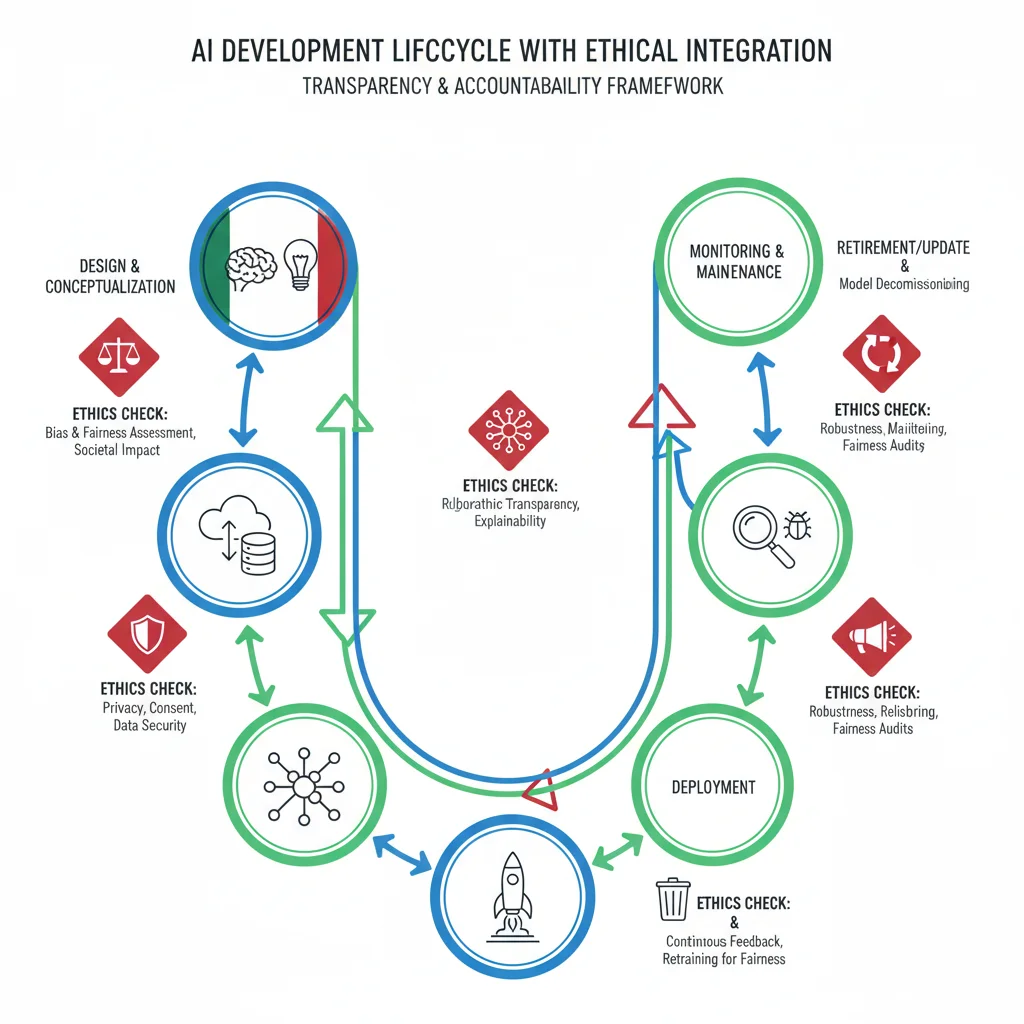
One of the most significant challenges in AI ethics is tackling bias and ensuring fairness in algorithms. AI models learn from the data they are fed, and if that data reflects existing societal biases, the AI will unfortunately perpetuate and even amplify them. This can lead to discriminatory outcomes in areas like hiring, lending, or even healthcare. Mexican developers must actively work to identify and mitigate these biases throughout the AI lifecycle, from data collection to model deployment. This involves carefully examining training datasets for imbalances and underrepresentation of certain groups.
Strategies for Bias Mitigation
Diverse Data Collection: Ensure training data accurately represents the diversity of the target population.
Bias Detection Tools: Utilize tools and frameworks designed to identify algorithmic bias in models.
Fairness Metrics: Employ specific fairness metrics to evaluate model performance across different demographic groups.
Algorithmic Audits: Conduct regular audits of AI systems to monitor for emergent biases and ensure fair outcomes.
Human-in-the-Loop: Incorporate human oversight to review and correct AI decisions, especially in sensitive applications.
By proactively addressing these issues, developers can build AI systems that are more equitable and trustworthy for all users in Mexico.
Promoting Transparency and Accountability in AI Systems
Transparency and accountability are fundamental to building public trust in AI technologies. For Mexican developers, this means making the workings of AI systems as clear as possible, especially when they make decisions that affect people’s lives. It’s not always about revealing every line of code, but rather explaining the rationale behind an AI’s output in an understandable way. This concept is often referred to as explainable AI (XAI). Users should have a general understanding of how an AI arrived at a particular conclusion, allowing for scrutiny and challenging of decisions if necessary. This is especially important in critical applications like credit scoring or medical diagnostics.
Accountability goes hand-in-hand with transparency. It means clearly defining who is responsible for the performance and impact of an AI system, from its design to its deployment and ongoing maintenance. Establishing clear lines of responsibility helps ensure that ethical considerations are not overlooked and that there are mechanisms for redress if an AI system causes harm. Implementing robust logging and auditing capabilities can also provide a clear trail of how decisions were made, reinforcing both transparency and accountability in AI development.
Frequently Asked Questions
What are the primary AI ethical concerns for Mexican developers?
Mexican developers primarily face concerns around data privacy compliance with local laws, mitigating algorithmic bias against diverse populations, ensuring transparency in AI decision-making, and establishing clear accountability for AI system outcomes. These are crucial for building trust and avoiding legal issues.
Is there a specific AI law in Mexico?
Currently, Mexico does not have a single, comprehensive AI-specific law. However, existing regulations like the Federal Law on Protection of Personal Data (LFPDPPP) apply to AI systems, and legislative discussions are ongoing to develop a more dedicated framework for AI governance.
How can developers ensure their AI models are fair?
To ensure fairness, developers should use diverse and representative training data, employ bias detection tools, apply fairness metrics during evaluation, conduct regular algorithmic audits, and consider human oversight in critical decision points. Continuous monitoring is also key.
What is explainable AI (XAI) and why is it important?
Explainable AI (XAI) refers to methods and techniques that allow human users to understand the output of AI models. It’s important because it fosters trust, enables debugging, helps identify biases, and is often a prerequisite for regulatory compliance, especially in sensitive applications.
Where can Mexican developers find resources on AI ethics?
Developers can find resources from academic institutions, international AI ethics organizations, government technology initiatives, and industry best practice guides. Staying connected with local AI communities and tech associations in Mexico can also provide valuable insights and updates.
Navigating the complex world of AI ethics Mexico is a critical endeavor for all developers looking to build impactful and responsible technology. As AI continues to evolve, understanding and integrating ethical considerations into every stage of development is no longer just a best practice—it’s a necessity. From adhering to data privacy laws to actively combating algorithmic bias and fostering transparency, the commitment to ethical AI ensures that innovations truly serve society.
By staying informed about the evolving regulatory landscape, adopting robust ethical principles, and implementing practical safeguards, Mexican developers can lead the way in creating AI solutions that are not only technologically advanced but also fair, secure, and trustworthy. This dedication will not only help avoid potential pitfalls but also build stronger, more reliable AI systems that benefit everyone. Embrace these challenges as opportunities to shape a more ethical and equitable digital future for Mexico and beyond.