Bridging the AI Talent Gap: 4 Key Training Initiatives
The growing AI talent gap presents a significant challenge for businesses. This article explores four key training initiatives designed to equip your workforce with crucial AI skills, ensuring your organization remains competitive and innovative in the evolving technological landscape.
Por: Michael Sete em 21 de agosto de 2026
Última atualização em: agosto 24, 2026
The rapid advancement of artificial intelligence (AI) is transforming industries worldwide, yet many organizations face a significant AI talent gap. This shortage of skilled professionals capable of developing, implementing, and managing AI solutions poses a substantial challenge to innovation and growth. Bridging this divide requires proactive and strategic approaches to workforce development, focusing on comprehensive training initiatives.
Understanding and addressing the AI talent gap is not just about hiring new experts; it’s also about empowering existing employees with the necessary knowledge and tools. By investing in targeted training programs, companies can cultivate an AI-ready workforce, ensuring they remain competitive and agile in an increasingly AI-driven economy. This article will explore four key training initiatives designed to help organizations effectively close this critical skills shortage.
Establishing Internal AI Academies and Bootcamps
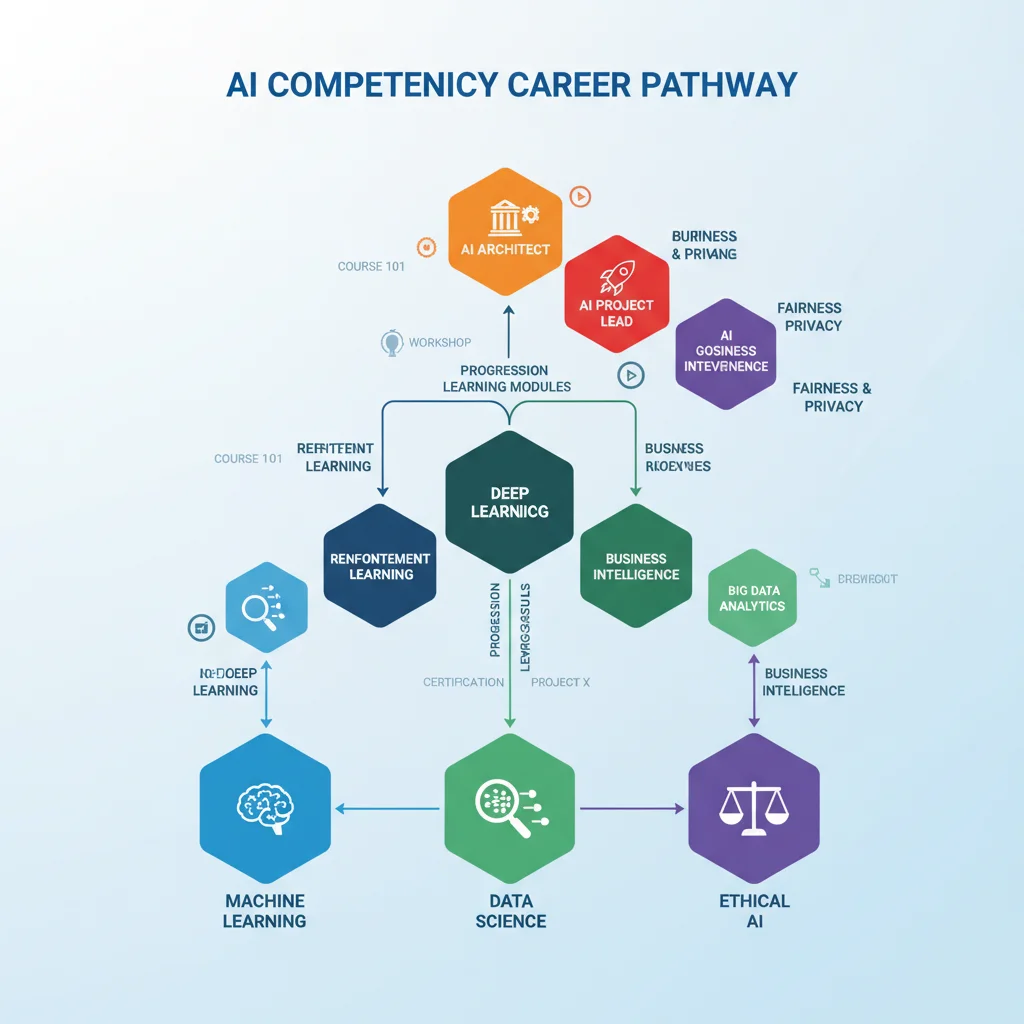
One highly effective strategy for addressing the AI talent gap is the establishment of internal AI academies or intensive bootcamps. These dedicated learning environments allow companies to tailor educational content precisely to their specific business needs and technological infrastructure. Unlike generic external courses, internal programs can focus on proprietary data, systems, and challenges, making the learning immediately relevant and applicable to employees’ day-to-day roles. This focused approach ensures that the skills acquired directly contribute to the company’s strategic objectives and operational efficiency.
These academies often combine theoretical knowledge with practical, hands-on projects, giving participants real-world experience in AI development and deployment. For example, employees might work on developing AI models for predictive maintenance, customer service automation, or data analysis relevant to their department. The immersive nature of bootcamps, typically lasting several weeks or months, allows for deep dives into complex topics like machine learning algorithms, natural language processing, and computer vision. This intensive format accelerates skill acquisition, transforming employees into proficient AI practitioners more quickly than traditional, piecemeal training methods.
Beyond technical skills, internal academies can also foster a culture of innovation and continuous learning within the organization. By providing a structured pathway for career development in AI, companies can boost employee morale and retention, as individuals see clear opportunities for growth and impact. Furthermore, these programs can serve as a pipeline for identifying and nurturing future AI leaders from within the existing workforce, leveraging institutional knowledge and loyalty. The investment in such initiatives pays dividends not only in terms of enhanced capabilities but also in building a resilient and adaptable workforce ready for future technological shifts.
Leveraging Online Learning Platforms and Certifications
In today’s digital age, online learning platforms have emerged as a powerful and flexible tool for addressing the AI talent gap. These platforms offer a vast array of courses, specializations, and certifications from leading universities and industry experts, making high-quality AI education accessible to a broad audience. Companies can strategically partner with these platforms to provide employees with access to curated learning paths that align with their organizational goals and the specific AI skills required for various roles. This approach allows for scalable training solutions that can reach a large number of employees simultaneously, regardless of their geographical location or work schedule.
The self-paced nature of many online courses is particularly beneficial, enabling employees to integrate learning into their existing work commitments without significant disruption. Whether it’s an introduction to Python for data science, advanced machine learning techniques, or ethical AI principles, employees can progress through modules at their own speed, reinforcing concepts as needed. Completing recognized certifications through these platforms also provides tangible proof of skill acquisition, boosting employee confidence and providing clear benchmarks for their professional development. These certifications are often developed with industry relevance in mind, ensuring that the skills learned are current and in demand.
Moreover, online learning platforms frequently update their content to reflect the latest advancements in AI, ensuring that employees are always learning the most relevant and up-to-date information. This continuous learning model is crucial in a rapidly evolving field like AI, where new tools and techniques emerge regularly. By subsidizing or fully funding these online learning opportunities, organizations demonstrate a commitment to their employees’ professional growth, which in turn fosters a more skilled and motivated workforce capable of tackling complex AI challenges and contributing significantly to the company’s innovation efforts.
Implementing Cross-Functional AI Projects and Mentorship
Beyond formal training programs, practical experience gained through cross-functional AI projects and dedicated mentorship is invaluable in bridging the AI talent gap. By involving employees from different departments in real-world AI initiatives, organizations can foster a collaborative learning environment where theoretical knowledge is immediately applied to practical business problems. This hands-on approach allows individuals to develop a deeper understanding of AI’s capabilities and limitations, as well as how it integrates with various aspects of the business. For instance, a marketing specialist might collaborate with a data scientist to develop an AI-driven customer segmentation model, learning about data preprocessing and model evaluation in the process.
Mentorship programs play a crucial role in accelerating this learning curve. Pairing less experienced employees with seasoned AI professionals provides a direct channel for knowledge transfer, guidance, and problem-solving. Mentors can offer insights into best practices, help navigate complex technical challenges, and provide career advice, creating a supportive ecosystem for skill development. This one-on-one interaction is often more effective than group training for addressing individual learning styles and specific skill gaps, ensuring that mentees receive personalized attention and tailored feedback. It also helps to cultivate a strong internal network of AI expertise, making it easier to share knowledge and resources across the organization.
These project-based learning and mentorship initiatives not only enhance technical proficiency but also develop critical soft skills, such as problem-solving, critical thinking, and interdepartmental communication. Employees learn to articulate AI concepts to non-technical stakeholders, manage project timelines, and work effectively in diverse teams. Such initiatives are particularly effective in creating a workforce that is not only technically capable but also strategically minded, understanding how AI solutions can drive business value. By fostering such an environment, companies can organically grow their internal AI capabilities and build a robust foundation for future innovation.
Key Benefits of Project-Based Learning
Practical Application: Employees apply theoretical knowledge to real business problems.
Skill Integration: Develops both technical and soft skills through collaborative work.
Problem-Solving Acumen: Enhances critical thinking and creative solutions to AI challenges.
Cross-Departmental Understanding: Improves collaboration and communication between teams.
Increased Engagement: Hands-on projects lead to higher motivation and retention of learning.
These benefits highlight how integral practical experience is to truly closing the AI talent gap, moving beyond mere theoretical understanding to practical mastery.
Partnering with Academia and External Experts
To effectively address the AI talent gap, organizations should also explore strategic partnerships with academic institutions and external AI experts. Collaborating with universities allows companies to tap into cutting-edge research, access specialized laboratories, and engage with emerging talent directly from academic programs. This can take various forms, such as sponsoring research projects, offering internships to AI students, or co-developing specialized courses that meet industry demands. Such partnerships provide a crucial link between theoretical advancements in academia and their practical application in the business world, ensuring that the workforce is trained on the most current and relevant AI methodologies.
Engaging external experts, consultants, or specialized training providers offers another avenue for targeted skill development. These experts often bring a wealth of experience from diverse industries and can provide specialized training on niche AI topics that might not be covered by internal resources. For instance, a company looking to implement a specific type of AI model, such as a generative adversarial network, might bring in an external expert for a focused workshop or consultation. This allows for rapid acquisition of highly specialized skills without the need to build internal expertise from scratch, which can be time-consuming and costly.
These external collaborations can also help organizations stay abreast of industry trends and best practices, ensuring their AI strategies remain competitive and forward-thinking. Participating in industry consortia, attending AI conferences, and contributing to open-source AI projects are additional ways to foster knowledge exchange and attract top talent. By actively engaging with the broader AI ecosystem, companies can not only enhance their internal capabilities but also contribute to the collective advancement of AI knowledge, solidifying their reputation as leaders in the field and making them more attractive to skilled professionals looking to make a significant impact.
Fostering a Culture of Continuous Learning and AI Literacy
Ultimately, bridging the AI talent gap requires more than just implementing specific training programs; it necessitates fostering a pervasive culture of continuous learning and broad AI literacy across the entire organization. This means moving beyond dedicated AI teams and ensuring that all employees, regardless of their role, have a foundational understanding of what AI is, how it works, and its potential impact on their work and the business. This general AI literacy helps to demystify the technology, reduce apprehension, and encourage employees to identify opportunities where AI can add value or solve problems within their respective domains. It’s about empowering everyone to think with an AI mindset.
To cultivate this culture, organizations can implement various initiatives, such as regular brown-bag seminars, internal newsletters focused on AI developments, or easily accessible knowledge bases. Encouraging experimentation with AI tools, even at a basic level, can also be highly effective. For example, providing access to low-code or no-code AI platforms allows non-technical employees to build simple AI models or automate tasks, giving them practical exposure without requiring extensive programming knowledge. This hands-on experience can spark interest and motivate individuals to pursue more in-depth AI training.
Leadership commitment is paramount in establishing and sustaining a learning culture. When leaders champion AI initiatives, allocate resources for training, and visibly participate in learning opportunities themselves, it sends a powerful message throughout the organization. This top-down encouragement reinforces the idea that continuous learning in AI is not just a benefit but a strategic imperative. By embedding AI literacy and a growth mindset into the organizational DNA, companies can create a dynamic environment where employees are constantly evolving their skills, adapting to new technologies, and collectively contributing to the organization’s AI journey, thereby sustainably addressing the AI talent gap.
Frequently Asked Questions
What is the AI talent gap?
The AI talent gap refers to the significant shortage of skilled professionals required to develop, implement, and manage artificial intelligence technologies effectively. This deficit hinders organizations’ ability to innovate and leverage AI to its full potential.
Why is addressing the AI talent gap important for businesses?
Addressing this gap is crucial because it directly impacts a company’s competitiveness, innovation capacity, and ability to adapt to technological advancements. A skilled AI workforce enables businesses to automate processes, gain insights from data, and create new products and services.
Can existing employees be trained to fill the AI talent gap?
Absolutely. Reskilling and upskilling existing employees is a highly effective strategy. Internal training programs, online courses, and mentorship can equip current staff with the necessary AI skills, leveraging their institutional knowledge and fostering loyalty.
What kind of AI skills are most in demand?
Currently, highly sought-after AI skills include machine learning, deep learning, natural language processing, computer vision, data science, ethical AI principles, and proficiency in programming languages like Python and R, along with cloud AI platforms.
How long does it typically take to train an employee in AI?
The duration varies significantly based on the existing skill level of the employee and the depth of AI expertise required. Basic AI literacy might take weeks, while becoming a proficient AI engineer could involve months or even years of continuous learning and practical application.
Official Resources
[IBM SkillsBuild for AI](https://www.ibm.com/training/skillsbuild)
[Google AI Education](https://ai.google/education/)
[World Economic Forum – The Future of Jobs Report](https://www.weforum.org/reports/the-future-of-jobs-report-2023/)
Conclusion
The imperative to bridge the AI talent gap is undeniable for organizations aiming to thrive in the modern technological landscape. As artificial intelligence continues to reshape industries, a skilled workforce is not just an asset but a fundamental necessity for innovation, efficiency, and sustained growth. The four key training initiatives explored—establishing internal academies, leveraging online platforms, implementing cross-functional projects with mentorship, and partnering with external experts—offer a multifaceted approach to cultivate the required expertise from within and outside the organization.
By strategically investing in these initiatives, companies can empower their employees with critical AI skills, foster a culture of continuous learning, and ensure they are well-equipped to navigate the complexities and opportunities presented by AI. This proactive stance not only addresses the immediate skills shortage but also builds a resilient and adaptable workforce capable of driving future success. The journey to closing the AI talent gap is an ongoing one, demanding commitment and foresight, but the rewards of a truly AI-ready organization are substantial and far-reaching.