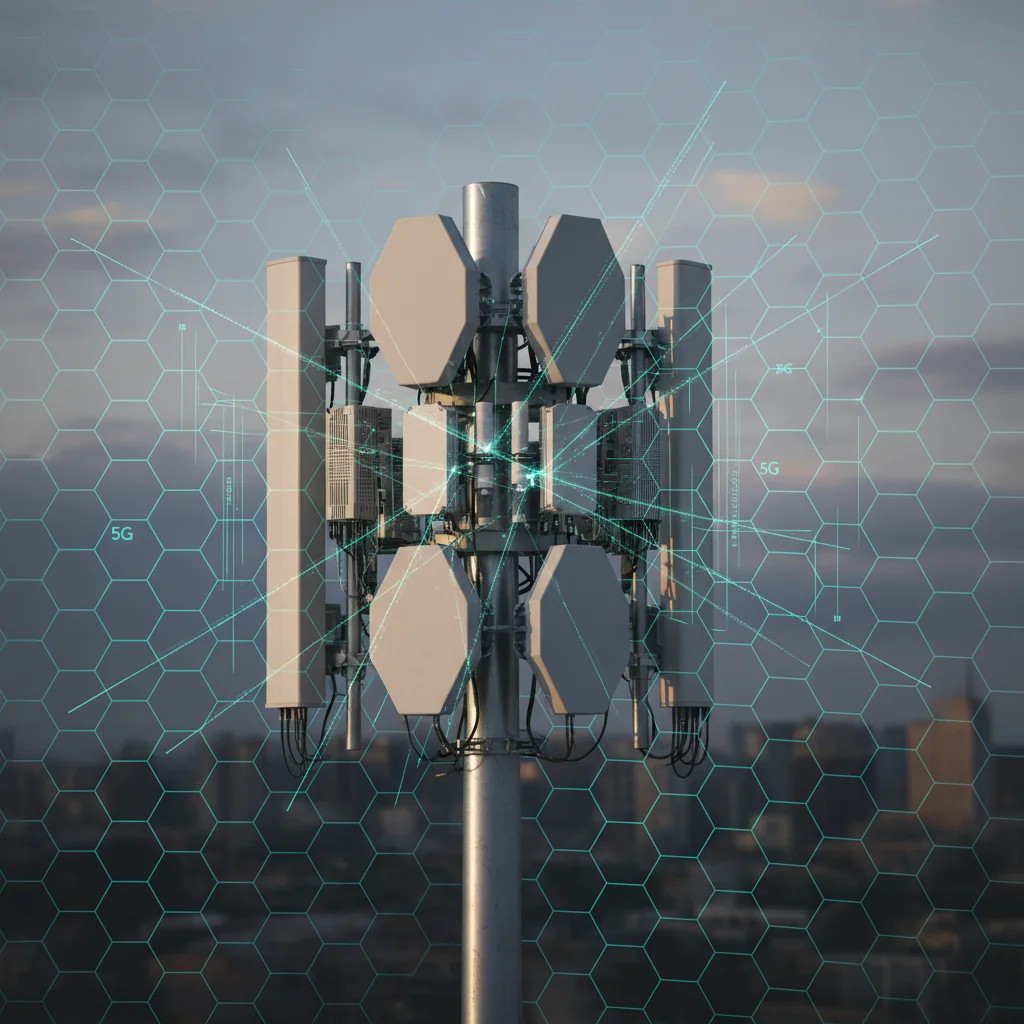
Future Connectivity: New Standards Shaping 5G and Beyond
The landscape of wireless communication is rapidly evolving. This article delves into the key future connectivity standards that are poised to redefine 5G and pave the way for next-generation networks, offering insights into their impact on various industries and daily life.
Por: Michael Sete em 21 de agosto de 2026
Última atualização em: agosto 24, 2026
The world is on the cusp of a major transformation in how we connect, communicate, and interact with technology. The evolution of wireless communication is relentless, constantly pushing the boundaries of speed, reliability, and capacity. As 5G networks become more widespread, the focus is already shifting to what comes next, with new future connectivity standards emerging to shape the next generation of telecommunications. These advancements are not just about faster internet; they promise to unlock entirely new applications and reshape industries from healthcare to manufacturing, creating a truly interconnected global ecosystem. Understanding these upcoming standards is crucial for anyone looking to stay ahead in our increasingly digital world.
Enhanced Mobile Broadband (eMBB) Evolution
Enhanced Mobile Broadband, or eMBB, has been a cornerstone of 5G from its inception, promising significantly higher speeds and greater capacity for mobile devices. However, the evolution of eMBB doesn’t stop there. As we look towards future connectivity standards, the capabilities of eMBB are continuously being refined and expanded. This ongoing development aims to push data rates even higher, reduce latency further, and support an even greater density of users and devices within a given area. The goal is to provide a seamless and lightning-fast experience, whether you’re streaming 8K video on the go, engaging in cloud gaming, or downloading large files in seconds.
One of the key aspects of eMBB’s evolution involves more sophisticated antenna technologies and advanced signal processing. Techniques like massive MIMO (Multiple Input, Multiple Output) are becoming even more complex, allowing base stations to communicate with many more devices simultaneously and efficiently. This improves overall network efficiency and ensures that high-speed connectivity is available even in crowded environments. The continued refinement of these technologies is vital for meeting the ever-growing demand for mobile data and supporting the next wave of data-intensive applications that are still on the horizon.
Furthermore, the integration of artificial intelligence and machine learning into network management is playing a significant role in optimizing eMBB performance. AI can predict network congestion, dynamically allocate resources, and even self-heal network issues, ensuring a consistently high-quality user experience. This intelligent management layer is essential for handling the complexity and scale of future networks, making them more robust and adaptable. The continuous push to enhance eMBB capabilities ensures that mobile connectivity remains at the forefront of technological innovation.
Ultra-Reliable Low-Latency Communication (URLLC) Advancements
Ultra-Reliable Low-Latency Communication, or URLLC, is perhaps one of the most transformative aspects of future connectivity standards. While eMBB focuses on speed and capacity, URLLC prioritizes instantaneous and incredibly dependable data transmission. This capability is not just an incremental improvement; it’s a fundamental shift that enables applications previously deemed impossible over wireless networks. Imagine surgical robots performing remote operations, autonomous vehicles communicating in real-time to prevent accidents, or industrial automation systems operating with millisecond precision – these are the scenarios URLLC is designed to support.
The advancements in URLLC involve a combination of innovative techniques to achieve its stringent requirements. One crucial element is the development of new waveform designs and coding schemes that are highly resilient to interference and signal loss. These methods ensure that critical data packets reach their destination almost instantaneously and without error, even in challenging wireless environments. Furthermore, network slicing, a key feature of 5G and beyond, allows dedicated portions of the network to be reserved and optimized specifically for URLLC traffic, guaranteeing its performance.
Another significant area of advancement lies in the integration of edge computing with URLLC. By processing data closer to the source, the need to send information to distant cloud servers is reduced, dramatically cutting down latency. This localized processing is critical for applications where every millisecond counts, providing the responsiveness needed for real-time control and interaction. The ongoing efforts in URLLC are laying the groundwork for a future where wireless networks are as reliable and predictable as wired connections, opening up vast possibilities for automation and critical services.
Massive Machine-Type Communication (mMTC) Enhancements
Massive Machine-Type Communication, known as mMTC, is all about connecting an unprecedented number of devices, forming the backbone of the Internet of Things (IoT). As we move towards future connectivity standards, the scale and diversity of IoT devices are set to explode, from tiny environmental sensors to smart city infrastructure and connected agricultural equipment. mMTC enhancements are focused on efficiently supporting billions, and eventually trillions, of these low-power, low-data-rate devices. The challenge lies in managing this immense number of connections without overwhelming the network or draining device batteries too quickly.
The evolution of mMTC involves several key technological advancements. One primary focus is on improving the energy efficiency of communication modules. Devices need to operate for years on a single battery, making ultra-low power consumption a critical design goal. New power-saving modes and communication protocols are being developed to minimize energy usage during data transmission and idle periods. This ensures that even the smallest and most remote IoT devices can remain connected and functional for extended durations, reducing maintenance overhead.
Optimizing for IoT Scale
Grant-Free Access: Allows devices to transmit small data packets without first requesting network resources, reducing signaling overhead and latency for intermittent communications.
Extended Coverage: New techniques are being deployed to provide reliable connectivity to devices located in challenging environments, such as basements, rural areas, or underground.
Simplified Protocols: Development of lightweight communication protocols specifically designed for low-complexity IoT devices, minimizing processing power and memory requirements.
Device Grouping: Intelligent network management that groups similar IoT devices to optimize resource allocation and reduce signaling storm issues.
Furthermore, the network architecture itself is being optimized for mMTC. This includes advanced resource scheduling and mechanisms to handle massive numbers of simultaneous connection requests efficiently. The goal is to create a network that can seamlessly integrate and manage a truly ubiquitous IoT, providing the data and insights needed to drive smart environments, intelligent industries, and enhanced public services. These enhancements are crucial for realizing the full potential of a connected world.
Integrated Sensing and Communication (ISAC)
Integrated Sensing and Communication, or ISAC, represents a fascinating convergence of two traditionally separate functionalities within wireless systems. Instead of communication systems merely transmitting data, ISAC proposes that they can also simultaneously sense their environment. This means that the same radio waves used to send and receive information can also be used to detect objects, measure distances, track movements, and even map environments. This dual functionality is a game-changer for future connectivity standards, offering significant benefits in terms of resource efficiency, cost reduction, and the creation of entirely new applications.
The core idea behind ISAC is to leverage the existing communication infrastructure for sensing purposes. Imagine a 5G base station not only providing internet access but also acting as a radar to monitor traffic flow, detect obstacles for autonomous vehicles, or even track inventory in a smart warehouse. This integration eliminates the need for separate sensing hardware, reducing deployment costs and energy consumption. It also allows for more compact and versatile devices, as a single radio can perform multiple tasks, leading to more efficient use of the electromagnetic spectrum.
ISAC technology is still in its early stages of development but holds immense promise. Researchers are exploring how to optimize waveforms and signal processing techniques to achieve both high-quality communication and accurate sensing simultaneously. This involves carefully designing signals that can carry information effectively while also reflecting off objects in a way that provides useful sensing data. The potential applications are vast, ranging from enhanced safety features in vehicles and drones to more precise gesture recognition in human-computer interaction, and even advanced environmental monitoring.
Non-Terrestrial Networks (NTN) Integration
Non-Terrestrial Networks, or NTN, are rapidly gaining prominence as a vital component of future connectivity standards, aiming to extend network coverage far beyond traditional ground-based infrastructure. This involves integrating satellite communication, high-altitude platforms (HAPs) like drones and balloons, and even low-Earth orbit (LEO) constellations into the global communication fabric. The primary objective of NTN is to provide seamless connectivity in remote areas, maritime environments, and even in the air, where deploying fiber optics or cellular towers is either impractical or impossible. This expansion of coverage is crucial for achieving truly ubiquitous connectivity.
The integration of NTN is not about replacing existing terrestrial networks but rather complementing them, creating a hybrid network architecture. For instance, LEO satellites can provide broadband internet to isolated communities or serve as backhaul for ground-based networks during disasters. HAPs, operating in the stratosphere, can offer localized coverage for specific events or temporary network augmentation. This layered approach ensures resilience and extends the reach of high-speed communication to every corner of the planet, bridging the digital divide and enabling new services in previously unconnected regions.
Key challenges in NTN integration include managing handovers between terrestrial and non-terrestrial components, dealing with longer propagation delays inherent in satellite links, and ensuring compatibility with existing communication protocols. However, significant progress is being made in these areas through standardization efforts and technological innovation. The seamless blending of NTN with terrestrial 5G and future networks will unlock a new era of global connectivity, enabling critical communication for emergency services, enhanced navigation for aviation and shipping, and ubiquitous IoT deployments across vast geographical areas. This holistic approach to network design is fundamental to the next wave of wireless evolution.
Frequently Asked Questions
What is the main goal of future connectivity standards?
The primary goal is to enhance wireless communication beyond current 5G capabilities, focusing on higher speeds, lower latency, greater reliability, massive device connectivity, and expanded coverage to enable new applications and services across various industries.
How will these new standards impact everyday users?
Everyday users will experience faster internet, more reliable connections, and the proliferation of new smart devices and services. This includes advancements like more immersive virtual and augmented reality, seamless smart home integration, and safer autonomous transportation.
What role does AI play in these future networks? Artificial intelligence and machine learning are crucial for optimizing network performance, managing complex resources, predicting and preventing congestion, and ensuring the efficient operation of billions of connected devices, making networks more resilient and adaptable.
Are these new standards part of 6G?
While some of these advancements are foundational to what will eventually become 6G, many are evolutions within the 5G framework, often referred to as ‘5G Advanced’ or ‘Beyond 5G.’ They represent the continuous development cycle that leads to the next generation of wireless technology.
When can we expect these technologies to be widely available?
Many of these technologies are already in various stages of development and pilot programs. Significant commercial deployment and widespread availability are expected to gradually roll out over the next few years, with some aspects becoming mainstream by the late 2020s.
The journey into future connectivity standards is an exciting and transformative one, promising to redefine our digital landscape. From the continuous evolution of Enhanced Mobile Broadband to the critical advancements in Ultra-Reliable Low-Latency Communication, the massive scale of Machine-Type Communication, the innovative integration of Sensing and Communication, and the expansive reach of Non-Terrestrial Networks, each standard plays a vital role. These interconnected developments are not merely technical upgrades; they are foundational pillars for a future where seamless, intelligent, and ubiquitous connectivity enables unprecedented innovation across every sector of society. Businesses will gain new efficiencies, individuals will experience richer digital interactions, and critical services will achieve new levels of reliability.
As these technologies mature and integrate, they will pave the way for applications that are currently only conceptual, pushing the boundaries of what’s possible in automation, artificial intelligence, and human-computer interaction. Staying informed about these rapidly evolving standards is key to understanding the trajectory of our connected world and preparing for the opportunities they will undoubtedly unlock. The future of connectivity is a collaborative effort, driven by global research and standardization, and its impact will be felt by everyone, everywhere. Embrace these changes, as they are set to shape our future in profound and exciting ways.