Serverless architectures are rapidly transforming cloud computing, offering significant advantages in scalability and cost-efficiency. This article delves into the rise of serverless, its core principles, benefits, challenges, and future impact on software development, highlighting its growing market adoption.
By: pedropadm2025@gmail.com on agosto 14, 2026
The landscape of technology is always changing, and few areas are evolving as quickly as cloud computing. A major shift we’re seeing is the rapid rise of serverless architectures cloud deployments. This approach is not just a passing trend; it’s fundamentally changing how applications are built, deployed, and managed, leading to a significant increase in its market share.
Many businesses are now looking closely at serverless options to improve their operations and reduce costs. This move reflects a growing need for more flexible, scalable, and efficient ways to handle digital workloads. Understanding what serverless means and why it’s gaining so much traction is key for anyone involved in modern software development and infrastructure planning.
Understanding Serverless Architectures
Serverless architectures represent a major evolution in how we think about deploying and running applications in the cloud. Instead of developers needing to provision, scale, and manage servers, cloud providers handle all of these infrastructure tasks automatically. This means you only write and deploy your code, and the cloud provider takes care of everything else needed to run it. It’s a powerful concept because it allows development teams to focus purely on writing application logic, rather than spending time on server maintenance or capacity planning.
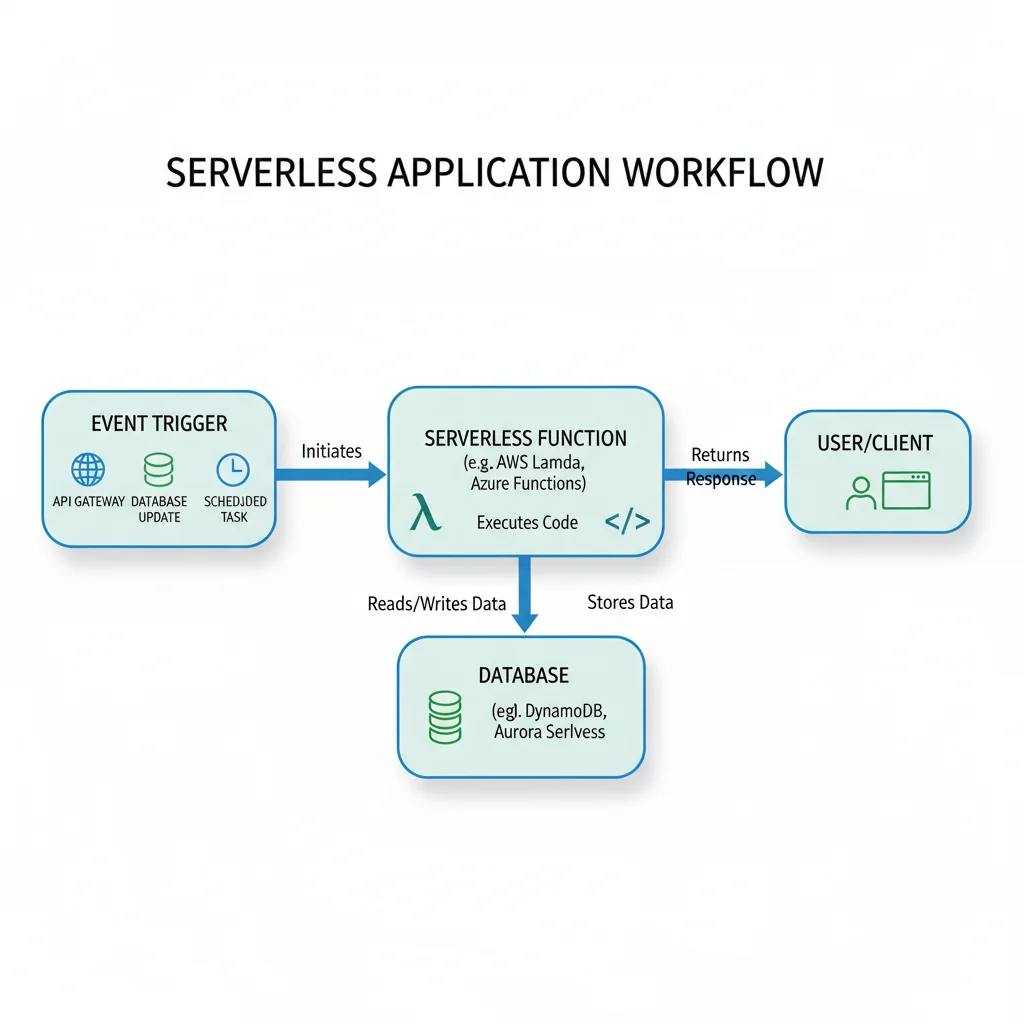
This model is often associated with Functions-as-a-Service (FaaS), where individual pieces of code, or functions, are executed in response to specific events. These events can range from an HTTP request to a database change or a file upload. The beauty of FaaS is that these functions only run when needed, and you only pay for the compute time consumed by your code. This ‘pay-per-execution’ model can lead to significant cost savings, especially for applications with inconsistent or spiky usage patterns.
Beyond FaaS, the serverless paradigm extends to various backend services, often called Backend-as-a-Service (BaaS). This includes serverless databases, message queues, and authentication services. Together, FaaS and BaaS form a comprehensive ecosystem that allows developers to build entire applications without ever directly managing a server. It’s a fundamental shift that simplifies operations and accelerates development cycles.
The Economic Advantages of Serverless Adoption
One of the most compelling reasons for the rapid growth in serverless architectures cloud usage is the clear economic benefit it offers. Traditional cloud models often require businesses to pay for server instances whether they are actively processing requests or sitting idle. This can lead to wasted resources and unnecessary expenditure, especially for applications with fluctuating demand. Serverless, however, operates on a true pay-as-you-go model, where costs are directly tied to the actual execution time and resources consumed by your code.
This cost efficiency is particularly attractive for startups and small to medium-sized businesses that need to maximize their budget. They can deploy applications without the upfront investment in server infrastructure or the ongoing costs of maintaining idle servers. Even large enterprises benefit by optimizing their cloud spend and reallocating resources to innovation rather than infrastructure management. The reduction in operational overhead, including patching, security updates, and scaling, also translates into significant savings in human resources and time.
Furthermore, the automatic scaling capabilities of serverless environments mean that applications can handle sudden spikes in traffic without manual intervention. This prevents over-provisioning in anticipation of peak loads, which can be expensive. Conversely, when demand is low, resources automatically scale down to zero, ensuring that costs remain minimal. This dynamic cost structure makes serverless an economically sound choice for a wide range of applications, from simple APIs to complex event-driven systems.
Enhanced Scalability and Performance
The ability to scale applications effortlessly is a cornerstone of modern cloud computing, and serverless architectures excel in this area. When an event triggers a serverless function, the cloud provider automatically provisions the necessary resources to execute that function. If a sudden surge of events occurs, the provider can instantly spin up multiple instances of the function to handle the increased load in parallel. This automatic, elastic scaling is a huge advantage over traditional server-based systems, which often require manual configuration or complex auto-scaling groups to achieve similar responsiveness.
This inherent scalability ensures that applications remain highly available and performant, even under unpredictable traffic patterns. Imagine an e-commerce site experiencing a flash sale; serverless functions can seamlessly handle thousands of concurrent requests without any degradation in user experience. Developers don’t need to worry about server capacity planning or pre-provisioning resources for peak loads. The infrastructure simply adjusts to demand, ensuring consistent performance and reliability.
Beyond just scaling up, serverless also scales down to zero when not in use. This means resources are only consumed when active, contributing to both cost efficiency and environmental sustainability. The rapid response to fluctuating demand, coupled with automatic resource allocation, makes serverless a powerful choice for building resilient and high-performing applications that can adapt to real-world usage patterns without manual intervention.
Challenges and Considerations in Serverless Adoption
While the benefits of serverless architectures are compelling, it’s important to acknowledge that they come with their own set of challenges and considerations. One common concern is the ‘cold start’ phenomenon. This occurs when a serverless function hasn’t been invoked for some time, and the cloud provider needs to initialize a new instance of it. This initialization can introduce a slight delay in response time, which might be noticeable for latency-sensitive applications. While providers are constantly working to minimize cold start times, it remains a factor to consider during design.
Another challenge revolves around vendor lock-in. Because serverless functions are tightly integrated with a specific cloud provider’s ecosystem (e.g., AWS Lambda, Azure Functions, Google Cloud Functions), migrating an entire serverless application to a different provider can be complex. This requires careful planning and potentially refactoring of code and configuration. Developers need to weigh the benefits of deep integration against the desire for multi-cloud flexibility. Additionally, the debugging and monitoring of distributed serverless applications can be more intricate than with monolithic applications, requiring specialized tools and practices.
Overcoming Serverless Hurdles
Optimize for cold starts: Use warm-up techniques or provisioned concurrency for critical functions.
Plan for vendor lock-in: Design with abstraction layers or consider multi-cloud strategies where appropriate.
Advanced monitoring: Implement robust logging, tracing, and observability tools tailored for serverless environments.
Security considerations: Carefully manage permissions and access controls for each function.
Local development: Utilize local emulation tools to speed up development and testing cycles.
The Future Impact of Serverless on Development
The continued growth of serverless architectures cloud technology promises to profoundly reshape the future of software development. As more organizations embrace this paradigm, we can expect to see an even greater focus on event-driven programming and microservices. Developers will increasingly think in terms of small, independent functions that react to specific events, rather than building large, monolithic applications. This shift encourages modularity, reusability, and faster iteration cycles.
The reduced operational burden means that development teams can allocate more of their time and talent to innovation and delivering new features. Instead of managing servers, they can concentrate on writing business logic that directly adds value. This acceleration of development velocity will be a key differentiator for businesses in competitive markets. Furthermore, the rise of serverless will likely spur the creation of even more specialized tools and frameworks designed to simplify serverless development, testing, and deployment, further lowering the barrier to entry.
We can also anticipate serverless expanding beyond traditional web and mobile applications into new domains like IoT, machine learning inference, and real-time data processing. The inherent scalability and cost model make it ideal for these use cases, where sporadic or high-volume event processing is common. As the technology matures and best practices become more established, serverless will likely become the default choice for many new application developments, cementing its position as a cornerstone of modern cloud infrastructure.
Frequently Asked Questions
What exactly does ‘serverless’ mean if there are still servers?
‘Serverless’ means that developers don’t have to manage or provision servers themselves. Cloud providers handle all the underlying infrastructure, allowing developers to focus solely on their code. Servers are still involved, but their management is completely abstracted away from the user.
Is serverless computing only for small applications?
Not at all. While serverless is great for small, event-driven tasks, it’s increasingly used for complex, large-scale applications, microservices architectures, and backend APIs. Many major companies leverage serverless for critical parts of their infrastructure due to its scalability and cost-efficiency.
What are the main benefits of using serverless architectures?
The primary benefits include reduced operational costs due to the pay-per-execution model, automatic scaling to handle varying loads, decreased operational overhead for developers, and faster time-to-market for applications. It allows teams to innovate more quickly.
Are there any security concerns with serverless?
Security in serverless environments is a shared responsibility. While cloud providers secure the underlying infrastructure, developers are responsible for securing their code, managing access permissions, and ensuring data privacy. Best practices for secure coding and identity management are crucial.
How does serverless differ from containers or virtual machines?
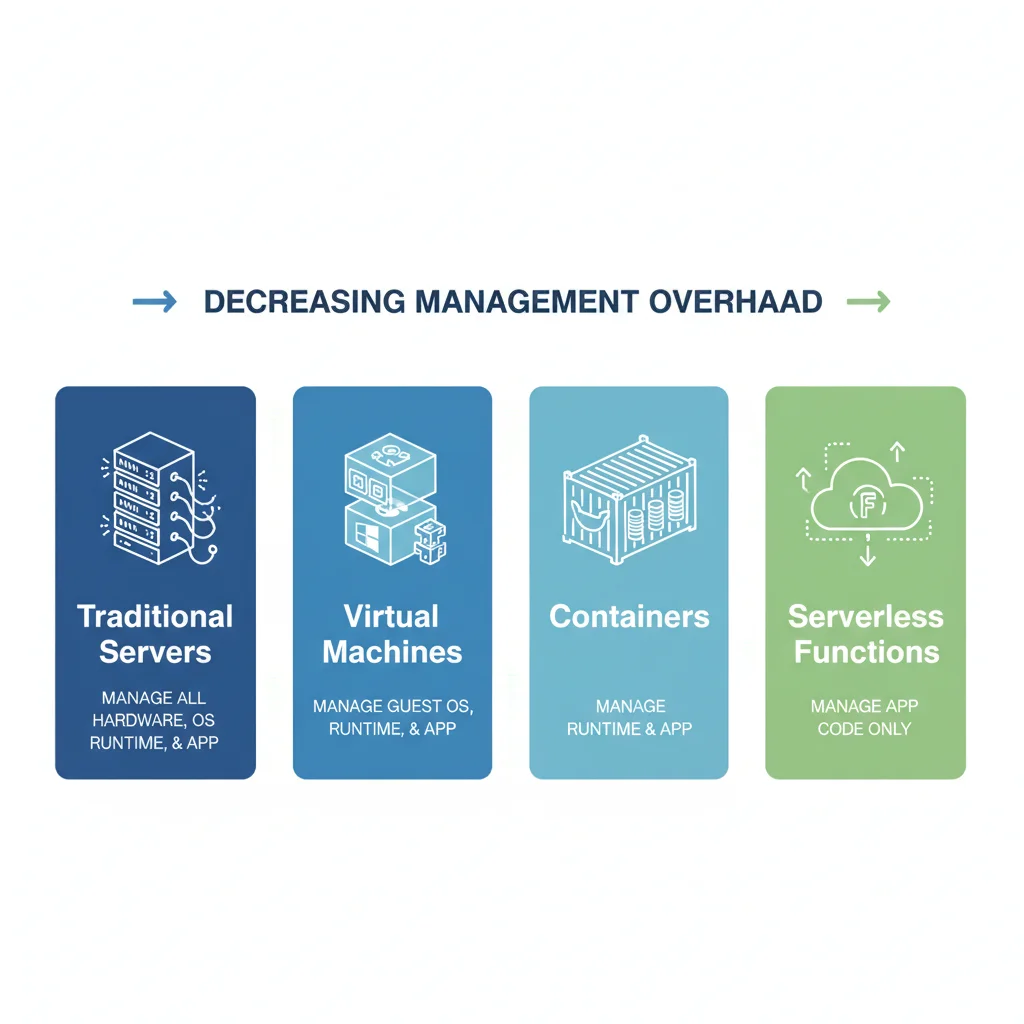
Virtual machines (VMs) and containers (like Docker) still require users to manage the operating system and runtime environment. Serverless, on the other hand, fully abstracts away the server and OS, letting you deploy just your code. It’s a higher level of abstraction, offering even less infrastructure management.
The journey of cloud computing has seen many transformations, and the rise of serverless architectures stands out as one of the most impactful. This innovative approach is not merely a technical upgrade; it represents a fundamental shift in how businesses build and manage their digital presence. By abstracting away the complexities of server management, serverless empowers developers to focus on what truly matters: creating valuable, functional code that drives business outcomes.
The economic advantages, stemming from a precise pay-per-execution model and significantly reduced operational overhead, are undeniable. Coupled with unparalleled automatic scalability and enhanced performance, serverless solutions are proving to be a powerful catalyst for innovation and efficiency. While challenges like cold starts and potential vendor lock-in require careful consideration, ongoing advancements in the serverless ecosystem are continually addressing these concerns, making the technology more robust and accessible.
As we look ahead, it’s clear that serverless architectures will continue to gain momentum, further solidifying their position as a cornerstone of modern cloud development. For organizations seeking agility, cost-effectiveness, and the ability to rapidly respond to market demands, embracing serverless is not just an option, but a strategic imperative. The future of application development is increasingly serverless, promising a more efficient, scalable, and developer-friendly landscape for all.