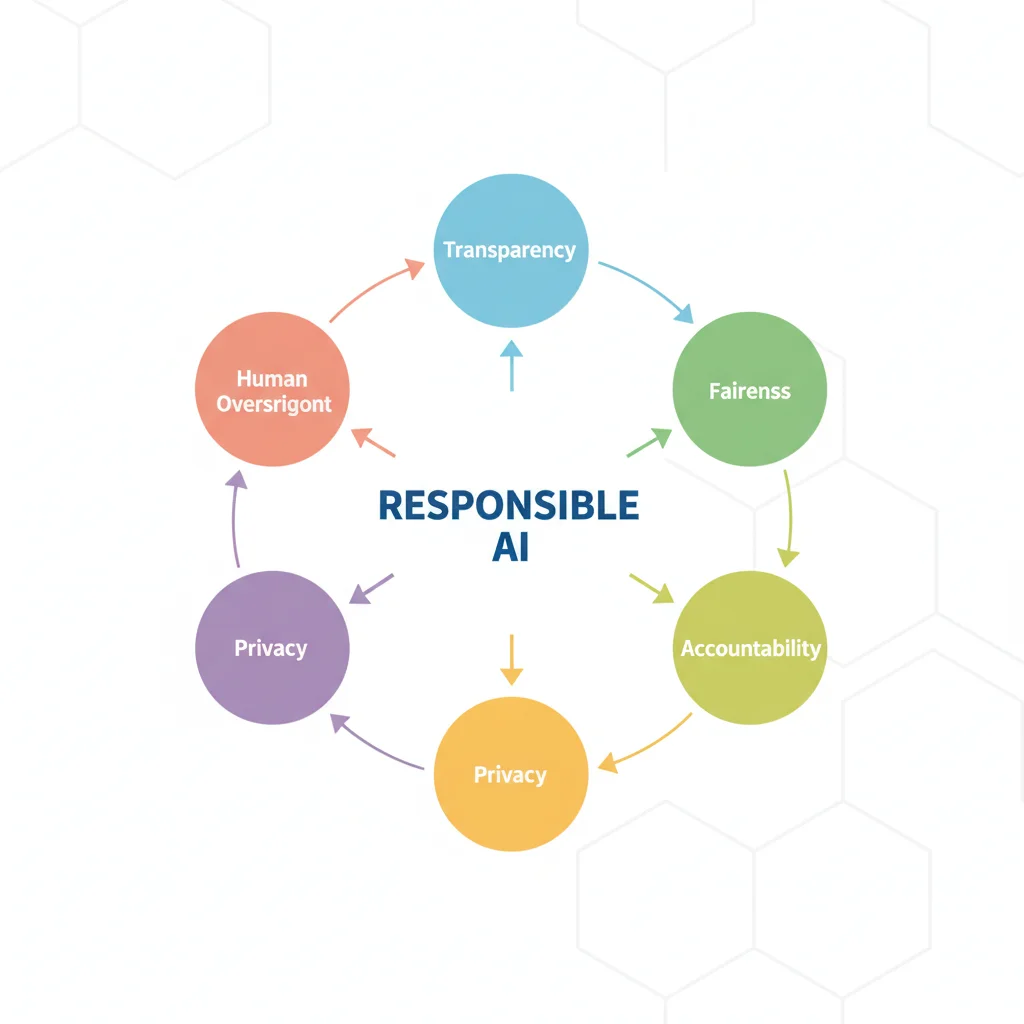
AI Ethics in Practice: 5 Frameworks for Responsible AI Development
Discover key AI ethics frameworks crucial for startups building responsible AI. This guide outlines 5 practical frameworks, helping you navigate ethical challenges and foster trustworthy AI development from the ground up.
Por: Michael Sete em 21 de agosto de 2026
Última atualização em: agosto 24, 2026
AI Ethics in Practice: 5 Frameworks for Responsible Development in Startups
In today’s fast-paced technological landscape, the discussion around AI ethics frameworks has moved from theoretical debates to practical necessities, especially for startups. Building artificial intelligence responsibly isn’t just a moral imperative; it’s a strategic advantage that fosters trust and ensures long-term success. As AI systems become more integrated into our daily lives, the decisions made during their development carry significant weight, impacting individuals and society at large.
Startups, often operating with lean teams and rapid development cycles, might feel overwhelmed by the prospect of integrating robust AI ethics frameworks. However, addressing ethical considerations early can prevent costly mistakes, reputational damage, and regulatory hurdles down the line. This article will explore five practical frameworks designed to guide startups in developing AI responsibly, ensuring their innovations are not only powerful but also fair, transparent, and accountable. Embracing these principles from the outset can transform potential risks into opportunities for leadership in responsible AI.
The IEEE Ethically Aligned Design: A Comprehensive AI Ethics Framework
The IEEE Ethically Aligned Design (EAD) is a foundational document that offers a comprehensive approach to AI ethics frameworks. It’s not just a set of guidelines; it’s a living document shaped by global experts, aiming to ensure that autonomous and intelligent systems are designed with human well-being at their core. For startups, this framework provides a detailed roadmap, covering everything from data privacy to algorithmic bias and accountability. It encourages developers to think proactively about the societal impact of their AI from the initial design phase, rather than treating ethics as an afterthought.
Implementing the EAD means embedding ethical considerations into every stage of the AI development lifecycle. This includes assessing potential risks, establishing clear lines of responsibility, and designing systems that are transparent and understandable to users. Startups can leverage the EAD to build a strong ethical foundation, which not only mitigates risks but also enhances user trust and brand reputation. The framework emphasizes the importance of human control and oversight, ensuring that AI remains a tool to augment human capabilities rather than replace human judgment entirely. It also stresses the need for continuous learning and adaptation as AI technology evolves, reflecting a dynamic approach to ethical governance.
Key Principles of IEEE Ethically Aligned Design
Human Autonomy: AI systems should respect and enhance human decision-making, not diminish it.
Well-being: Prioritize the well-being of all stakeholders, ensuring AI benefits society.
Transparency: Make AI systems understandable, allowing users to comprehend their actions.
Accountability: Establish clear responsibility for the outcomes of AI systems.
Fairness: Design AI to be equitable and non-discriminatory, avoiding bias.
By focusing on these core principles, startups can create AI solutions that are not only innovative but also ethically sound and socially responsible. The EAD helps in navigating complex ethical dilemmas by providing a structured way to evaluate AI’s impact and ensure its alignment with human values. This proactive stance on AI ethics frameworks differentiates responsible innovators from those who might face challenges later due to unforeseen ethical issues.
The Partnership on AI’s Tenets: Collaborative AI Ethics Guidelines
The Partnership on AI (PAI) brings together leading companies, academics, and civil society organizations to address the most important and challenging questions concerning AI’s impact on people and society. Their tenets offer practical guidance for responsible AI development, emphasizing collaboration and shared learning. For startups, PAI’s approach is particularly valuable because it highlights the importance of collective responsibility in shaping the future of AI. It encourages an open dialogue about ethical challenges and promotes the sharing of best practices across the industry, which can be a significant advantage for smaller organizations looking to establish ethical guidelines without reinventing the wheel.
The PAI tenets cover crucial areas such as the safe and beneficial development of AI, fairness, transparency, and accountability. They advocate for research that advances public understanding of AI and for practices that protect individual rights and freedoms. By adopting PAI’s principles, startups can demonstrate a commitment to broader societal well-being, which resonates well with investors, customers, and employees alike. This framework helps in building AI systems that are not only technically advanced but also designed with a deep understanding of their potential social implications, fostering a culture of ethical innovation from the ground up.
Engaging with the Partnership on AI’s resources and community can provide startups with access to valuable insights and a network of experts. This collaborative environment supports the development of robust AI ethics frameworks that are informed by diverse perspectives and real-world challenges. It also helps in anticipating future ethical considerations as AI technology continues to evolve, ensuring that ethical guidelines remain relevant and effective over time. Embracing these tenets means actively participating in the global conversation about responsible AI, positioning a startup as a leader in ethical technology.
The PAI framework is designed to be adaptable, recognizing that ethical challenges in AI are complex and context-dependent. It encourages continuous evaluation and refinement of ethical practices, promoting a dynamic approach to AI governance. This flexibility is crucial for startups that need to innovate quickly while maintaining high ethical standards. By aligning with PAI’s collaborative spirit, startups can contribute to a future where AI serves humanity in a truly beneficial and equitable way, making responsible AI development a core part of their mission and strategy.
Google’s AI Principles: A Corporate-Driven Approach to AI Ethics Frameworks
Google’s AI Principles represent a significant corporate initiative to define and implement AI ethics frameworks within a large organization. While developed by a tech giant, these principles offer valuable lessons and a clear template for startups seeking to establish their own ethical guidelines. Google outlines seven objectives for AI applications, coupled with specific areas to avoid, providing a practical blueprint for responsible AI development. These principles emphasize beneficial social impact, avoiding unfair bias, building and testing for safety, and being accountable to people.
For startups, understanding Google’s approach can help in formulating their own ethical stance, especially if they are developing products or services that interact with Google’s ecosystem or similar large-scale platforms. The principles encourage a deep consideration of how AI might affect users and society, pushing developers to think beyond immediate technical capabilities. They highlight the need for privacy by design, robust security measures, and human oversight, ensuring that AI systems are always subject to human control and intervention. Adopting similar principles can help startups build trustworthy AI from the ground up, aligning their innovations with broader societal expectations.
One of the key takeaways from Google’s AI Principles is the emphasis on external validation and continuous improvement. They acknowledge that ethical AI development is an ongoing process, requiring constant vigilance and adaptation to new challenges. Startups can learn from this by establishing internal review processes and seeking feedback from diverse stakeholders to identify and mitigate ethical risks effectively. This proactive and iterative approach to AI ethics frameworks helps in fostering a culture of responsibility within the organization, making ethical considerations an integral part of product development and deployment. It also helps in building a reputation as a responsible innovator, which can attract talent and investment.
Furthermore, Google’s principles address the critical issue of avoiding harmful applications, explicitly stating that AI should not be used for weapons, surveillance violating international norms, or technologies that cause overall harm. This provides a clear ethical boundary that startups can emulate, ensuring their innovations contribute positively to the world. By adopting similar stringent criteria, startups can differentiate themselves in a competitive market, demonstrating a commitment to ethical practices that extends beyond mere compliance. This corporate-driven framework, therefore, serves as a powerful guide for any startup committed to building AI responsibly and sustainably, navigating the complex ethical landscape with confidence and integrity.
The AI Ethics Guidelines for Trustworthy AI: European Commission’s Vision
The European Commission’s AI Ethics Guidelines for Trustworthy AI provide a comprehensive and influential set of AI ethics frameworks, especially relevant for startups operating in or targeting the European market. These guidelines are built around seven key requirements that AI systems should meet to be considered trustworthy: human agency and oversight, technical robustness and safety, privacy and data governance, transparency, diversity, non-discrimination and fairness, societal and environmental well-being, and accountability. This holistic approach ensures that AI development not only adheres to legal standards but also respects fundamental rights and ethical principles.
For startups, understanding and implementing these guidelines is crucial for regulatory compliance and market acceptance within the EU. The framework encourages a ‘human-centric’ approach, where AI serves humanity and respects human values. It emphasizes the need for systems that are technically sound, secure, and resilient, while also being transparent about their capabilities and limitations. This means designing AI with clear communication about how it works, what data it uses, and how decisions are made, fostering trust among users and stakeholders.
The guidelines also stress the importance of diversity and non-discrimination, urging developers to actively identify and mitigate biases in their AI systems. This includes ensuring that AI models are trained on diverse datasets and that their outputs do not perpetuate or amplify existing societal inequalities. For startups, this translates into a need for careful data curation, rigorous testing, and continuous monitoring of AI performance to ensure fairness. Adhering to these principles not only helps avoid legal penalties but also positions the startup as a responsible and inclusive innovator, appealing to a broader customer base.
Finally, the European Commission’s framework places a strong emphasis on accountability, requiring mechanisms to ensure responsibility for AI’s impacts. This includes auditable systems, impact assessments, and redress mechanisms for individuals affected by AI decisions. Startups can integrate these elements by designing their AI systems with logging capabilities, conducting regular ethical impact assessments, and establishing clear channels for user feedback and complaints. By proactively addressing these requirements, startups can build AI solutions that are not only innovative but also legally compliant, ethically sound, and widely trusted, setting a high standard for responsible AI development globally.
The Montréal Declaration for Responsible AI: A Rights-Based Approach
The Montréal Declaration for Responsible AI offers a unique, rights-based approach to AI ethics frameworks, developed through a broad public consultation process. This declaration emphasizes the need for AI development to respect fundamental human rights, democratic values, and ecological sustainability. For startups, adopting a rights-based perspective means viewing AI through the lens of its potential impact on individual freedoms, privacy, and societal equity. It encourages developers to consider how their AI systems might uphold or challenge human dignity, autonomy, and justice, moving beyond purely technical considerations to embrace a broader ethical vision.
The declaration outlines ten guiding principles, including well-being, autonomy, justice, privacy, knowledge, mastery of technology, democracy, equity, solidarity, and ecological sustainability. Each principle provides a specific lens through which to evaluate AI projects, prompting startups to ask critical questions about the social and environmental implications of their innovations. For instance, the principle of ‘justice’ compels developers to ensure that AI does not exacerbate existing inequalities or create new forms of discrimination. This requires a proactive approach to identifying and mitigating potential harms, particularly for vulnerable populations, ensuring that AI benefits everyone equitably.
Implementing the Montréal Declaration involves embedding these rights-based considerations into the very core of a startup’s mission and product development process. This could mean conducting human rights impact assessments for new AI applications, designing user interfaces that promote transparency and user control, and actively seeking diverse perspectives in the development team. By aligning with these principles, startups can build AI systems that are not only technologically advanced but also deeply respectful of human values and societal well-being. This commitment to a rights-based framework can significantly enhance a startup’s reputation, attracting ethically conscious talent and customers who prioritize responsible technology.
Moreover, the emphasis on ecological sustainability in the Montréal Declaration highlights the environmental footprint of AI, urging developers to consider the energy consumption and resource demands of their systems. For startups, this means exploring more energy-efficient AI models and infrastructure, contributing to a more sustainable technological future. By integrating these comprehensive AI ethics frameworks, startups can demonstrate leadership in responsible innovation, ensuring their contributions to the AI landscape are both impactful and ethically sound. This forward-thinking approach prepares them for a future where ethical considerations are as critical as technical prowess in determining success.
Frequently Asked Questions
What is an AI ethics framework?
An AI ethics framework is a set of guidelines, principles, or rules designed to ensure that artificial intelligence systems are developed and used in a responsible, fair, transparent, and accountable manner. These frameworks help organizations navigate the complex ethical challenges posed by AI technologies.
Why are AI ethics frameworks important for startups?
For startups, AI ethics frameworks are crucial for building trust with users and investors, mitigating risks like algorithmic bias or privacy breaches, ensuring regulatory compliance, and fostering a reputation as a responsible innovator. Early adoption can prevent costly issues down the line.
How can a startup choose the right AI ethics framework?Startups should consider their specific industry, target market, and the nature of their AI applications. Evaluating frameworks like IEEE, PAI, Google’s principles, or the EU guidelines based on their relevance to your operational context and ethical priorities can help in making an informed choice.
Is implementing an AI ethics framework a one-time process?
No, implementing an AI ethics framework is an ongoing process. As AI technology evolves and societal expectations change, ethical guidelines need continuous review, adaptation, and refinement. It requires regular assessments and a commitment to continuous learning.
What are the main benefits of adopting AI ethics frameworks?
Benefits include enhanced user trust, improved brand reputation, reduced legal and reputational risks, better decision-making in AI development, attracting ethical talent, and contributing to a more responsible and sustainable technological future.
Embracing robust AI ethics frameworks is no longer optional for startups; it’s a fundamental pillar for sustainable growth and innovation. The frameworks discussed—IEEE Ethically Aligned Design, Partnership on AI’s Tenets, Google’s AI Principles, the European Commission’s Guidelines, and the Montréal Declaration—each offer unique perspectives and actionable guidance. By integrating these principles, startups can proactively address complex ethical challenges, build trustworthy AI systems, and foster a culture of responsibility from their inception.
The journey toward responsible AI development is continuous, requiring vigilance, adaptability, and a commitment to human-centric values. Startups that prioritize AI ethics frameworks will not only mitigate risks and ensure compliance but also gain a significant competitive advantage. They will attract top talent, earn the trust of their users, and contribute to a future where AI serves humanity in a beneficial and equitable manner. Investing in ethical AI is an investment in a more responsible, innovative, and successful future for your startup and for society as a whole.