This practical guide to MLOps for 2026 demystifies Machine Learning Operations, offering clear strategies for integrating ML models into production. Learn essential steps for efficient development, reliable deployment, and robust monitoring to achieve scalable AI solutions and drive business value effectively.
By: Michael Sete on agosto 14, 2026
Machine Learning Operations, or MLOps, is rapidly becoming a cornerstone for any organization serious about deploying AI at scale. If you’re looking for a comprehensive MLOps practical guide for 2026, you’ve come to the right place. This field bridges the gap between machine learning development and operations, ensuring that models move from experimental stages to reliable, production-ready systems smoothly and efficiently. Understanding MLOps is crucial for data scientists, engineers, and business leaders who want to harness the full potential of their AI investments, transforming raw models into tangible business value.
What Exactly is MLOps and Why Does it Matter?
MLOps represents a set of practices that aims to deploy and maintain machine learning models in production reliably and efficiently. It’s not just about writing code or training models; it’s about the entire lifecycle, from data collection and model development to deployment, monitoring, and retraining. Think of it as DevOps for machine learning, tailored to address the unique challenges that come with AI systems. Unlike traditional software, machine learning models degrade over time due to shifts in data patterns, requiring constant vigilance and updates.
The importance of MLOps cannot be overstated in today’s data-driven world. Without robust MLOps practices, organizations often struggle with models that perform well in testing but fail in production, or models that become outdated quickly. It ensures collaboration between data scientists, ML engineers, and operations teams, leading to faster deployment cycles, improved model performance, and better governance. This systematic approach reduces risk, increases predictability, and ultimately drives greater business value from AI initiatives.
Key Pillars of a Robust MLOps Framework
Building an effective MLOps framework involves several critical components that work together to streamline the machine learning lifecycle. These pillars ensure that models are not only developed efficiently but also maintained and improved continuously once deployed. Understanding these foundational elements is crucial for anyone looking to implement MLOps successfully within their organization. Each pillar addresses a specific challenge in the journey from raw data to a production-ready, high-performing AI system.
Data and Experiment Management
Version Control for Data: Just like code, data used for training models needs to be versioned. This allows teams to track changes, reproduce experiments, and revert to previous datasets if needed. It’s essential for debugging and ensuring consistency.
Experiment Tracking: Keeping a detailed record of all experiments, including model architectures, hyperparameters, and performance metrics, is vital. This helps teams compare different models, understand what works best, and avoid repeating past mistakes.
Feature Stores: A centralized repository for curated and transformed features can significantly speed up model development and ensure consistency across different models. It promotes feature reuse and reduces redundant data processing.
The MLOps Workflow: From Development to Production
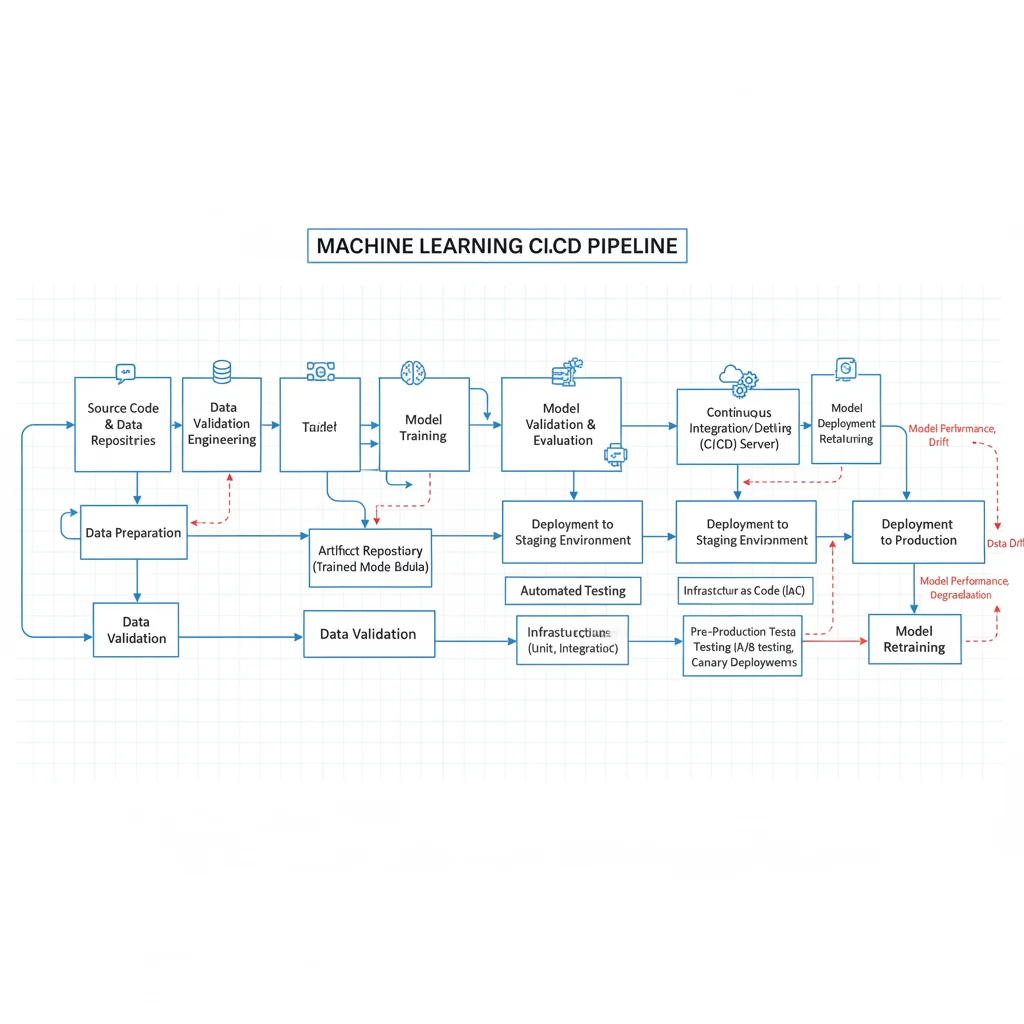
The MLOps workflow is a continuous cycle designed to automate and standardize the process of taking a machine learning model from an idea to a fully operational system. This journey involves several distinct stages, each with its own set of challenges and best practices. A well-defined workflow ensures that models are robust, reliable, and scalable, minimizing manual interventions and potential errors. It emphasizes collaboration and automation at every step, creating a seamless transition between development and deployment environments.
This streamlined process allows teams to iterate faster, experiment more freely, and deploy updates with confidence. It also provides a clear path for handling model retraining and redeployment as data patterns evolve or performance degrades. Embracing a structured MLOps workflow is fundamental for any organization aiming to achieve consistent success with its machine learning initiatives and maintain a competitive edge.
Implementing CI/CD for Machine Learning Models
Continuous Integration and Continuous Delivery (CI/CD) pipelines are not just for traditional software development anymore; they are indispensable for effective MLOps. Implementing CI/CD for machine learning models automates the process of testing, building, and deploying models, significantly reducing manual effort and potential for human error. This automation ensures that every change to code, data, or model configuration triggers a series of automated checks, providing rapid feedback to developers and maintaining the quality of the deployed models.
A well-structured CI/CD pipeline for ML typically includes automated data validation, model training, model evaluation, and deployment to staging or production environments. This continuous feedback loop allows teams to quickly identify and resolve issues, ensuring that only high-quality, validated models make it into production. It also facilitates faster iteration and experimentation, which are critical for staying agile in the rapidly evolving AI landscape.
Monitoring and Maintaining Deployed ML Models
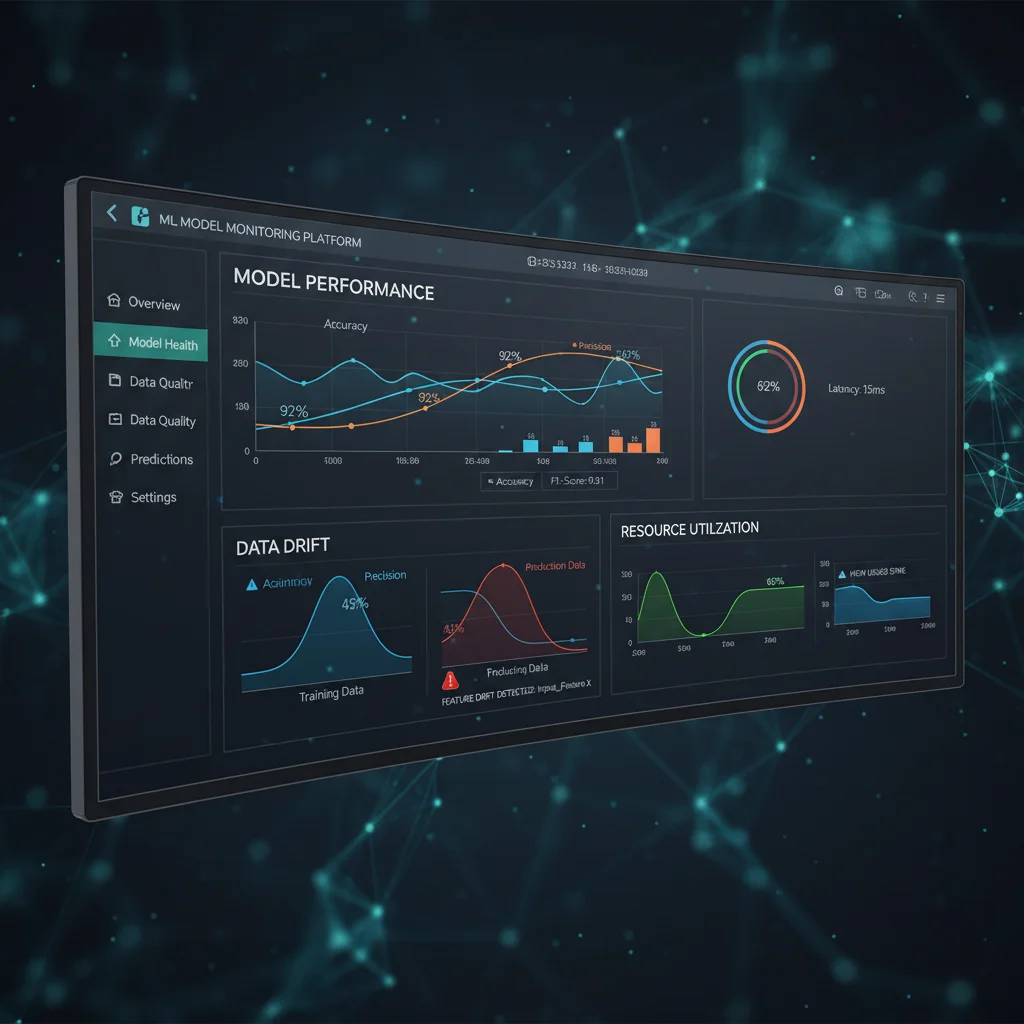
Deploying a machine learning model is not the end of the MLOps journey; it’s just the beginning. Continuous monitoring and maintenance are crucial for ensuring that deployed models continue to perform as expected and deliver value over time. Models can degrade due to various factors, such as changes in input data distribution (data drift), changes in the relationship between input features and target variables (concept drift), or even infrastructure issues. Proactive monitoring helps detect these problems early, preventing significant performance degradation or business impact.
Effective monitoring involves tracking key performance indicators (KPIs) like accuracy, precision, recall, and F1-score, as well as operational metrics like latency and throughput. It also includes setting up alerts for anomalies and establishing clear procedures for retraining and redeploying models when necessary. A robust monitoring system is the backbone of reliable AI, ensuring that your machine learning investments remain effective and trustworthy long after initial deployment.
Best Practices for a Successful MLOps Implementation in 2026
Adopting MLOps effectively requires more than just tools; it demands a shift in mindset and a commitment to best practices. As we look towards 2026, several key strategies stand out for ensuring a successful MLOps implementation. First, fostering strong collaboration between data scientists, ML engineers, and operations teams is paramount. Silos can cripple even the most advanced MLOps tools. Establishing clear communication channels and shared responsibilities ensures everyone is aligned on goals and processes.
Secondly, start small and iterate. Don’t try to implement every MLOps component at once. Begin with automating key stages of your ML lifecycle, such as model deployment or monitoring, and gradually expand. This allows teams to learn, adapt, and build confidence. Prioritize reproducibility by versioning everything: code, data, models, and environments. This ensures that experiments can be replicated and models can be rolled back if issues arise. Finally, invest in continuous learning and skill development, as the MLOps landscape is constantly evolving. Staying updated with new tools and techniques will keep your implementation robust and future-proof.
Frequently Asked Questions
What is the primary goal of MLOps?
The primary goal of MLOps is to standardize and streamline the entire machine learning lifecycle, from experimentation to deployment and ongoing maintenance. This ensures models are delivered reliably, efficiently, and at scale, providing consistent business value.
How does MLOps differ from DevOps?
While MLOps shares many principles with DevOps, it addresses unique challenges specific to machine learning, such as data versioning, model drift, experiment tracking, and the need for continuous model retraining. It extends DevOps practices to handle the complexities of data and model artifacts.
What are common challenges in implementing MLOps?
Common challenges include organizational silos between data science and operations teams, lack of standardized tools and processes, managing data and model versioning effectively, ensuring model explainability, and monitoring model performance drift in production environments.
Is MLOps only for large enterprises?
No, MLOps practices are beneficial for organizations of all sizes. While large enterprises might have more complex needs, even small teams can benefit from adopting MLOps principles to improve model reliability, accelerate deployment, and reduce operational overhead.
What skills are essential for an MLOps engineer?
An MLOps engineer typically requires a blend of skills including machine learning expertise, software engineering proficiency (especially in Python or R), cloud computing knowledge, experience with CI/CD tools, and a strong understanding of data engineering principles.
Navigating the complexities of machine learning deployment requires a robust and thoughtful approach, and MLOps provides exactly that. This MLOps practical guide for 2026 has walked through the essential components, workflows, and best practices necessary to transform your AI initiatives from experimental projects into reliable, value-generating systems. By embracing MLOps, organizations can overcome common hurdles like model degradation, slow deployment cycles, and lack of reproducibility, paving the way for more efficient and impactful AI solutions.
The future of AI success hinges on seamless integration between development and operations. As machine learning models become more sophisticated and integral to business processes, a well-implemented MLOps strategy will be a key differentiator. We encourage you to start incorporating these principles into your own machine learning pipelines. Begin by identifying areas where automation and collaboration can yield the most significant improvements, and gradually build out your MLOps capabilities. The journey to scalable, dependable AI is continuous, and MLOps is your essential roadmap.