New Cyber Threats: Smart Gadget Attack Vectors Unveiled
The landscape of cyber threats is constantly evolving, especially for smart gadgets. This article delves into two significant new attack vectors expected to emerge in the next six months, offering insights into how these vulnerabilities could be exploited and providing actionable advice to protect your connected devices and personal data.
Por: pedropadm2025@gmail.com em 14 de agosto de 2026
The digital world is constantly evolving, and with it, the landscape of cyber threats. As our lives become increasingly intertwined with smart gadgets, understanding the new cyber threats targeting these devices is more critical than ever. In the next six months, experts anticipate the emergence of sophisticated attack vectors designed to exploit vulnerabilities in our connected homes and personal devices.
These emerging threats pose significant risks, not just to our data privacy but also to the functionality and security of our daily lives. Staying informed about these potential dangers is the first step in building a robust defense strategy against the ever-present challenge of digital insecurity. We’ll explore two key areas where new attack methodologies are expected to surface.
The Rise of Advanced Side-Channel Attacks on Smart Gadgets
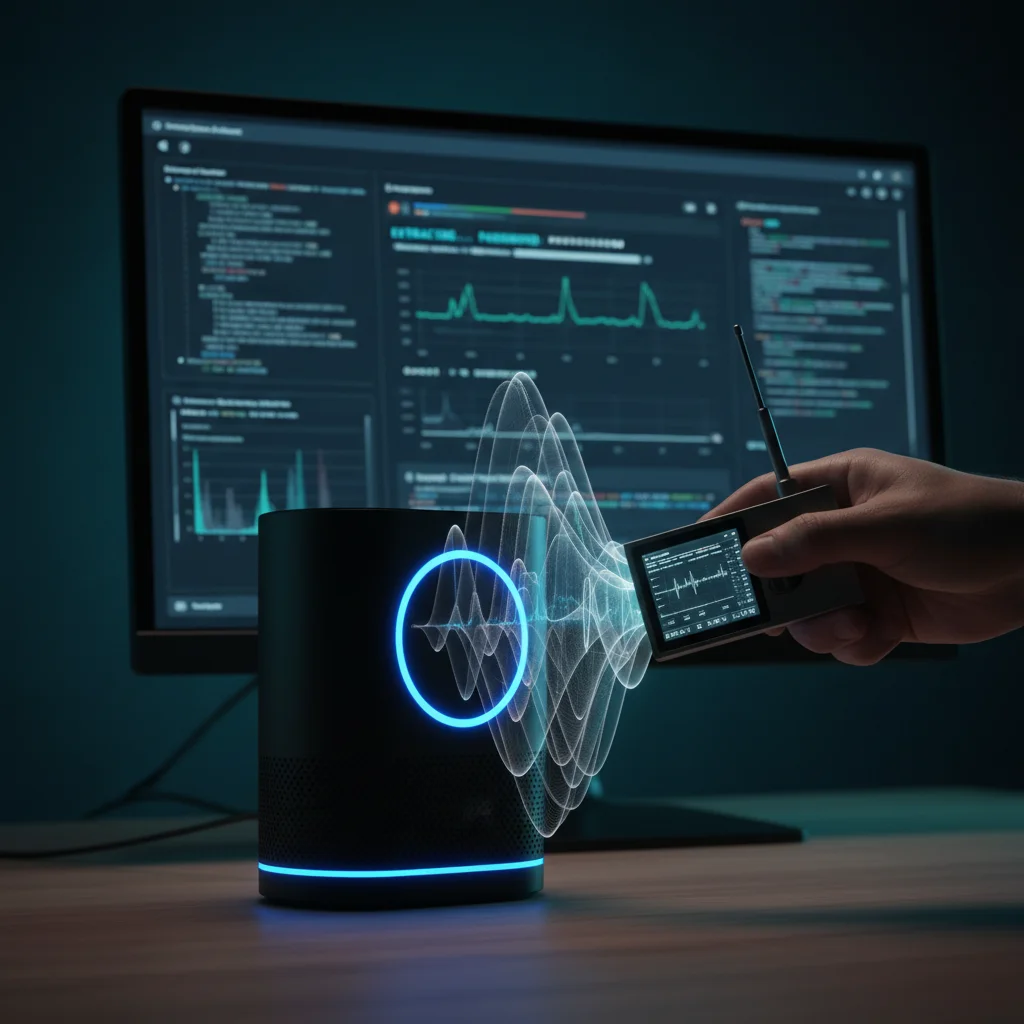
Side-channel attacks, while not entirely new, are expected to evolve significantly in their sophistication and targeting of smart gadgets. These attacks don’t directly target software vulnerabilities but instead exploit information leaked unintentionally through the physical implementation of a system. This could include power consumption, electromagnetic emissions, or even timing variations during cryptographic operations. Attackers are becoming more adept at analyzing these subtle signals to extract sensitive information, like encryption keys or personal data, from devices that appear otherwise secure.
The increasing processing power and miniaturization of smart devices make them both more attractive targets and potentially more vulnerable to these refined techniques. Imagine a smart lock or a payment device inadvertently broadcasting clues about your PIN or credit card information through its power fluctuations. The challenge lies in the difficulty of detecting such attacks, as they often leave no digital trace of intrusion, making them particularly insidious.
Exploiting Physical Emissions
Power Analysis: Attackers monitor power consumption during cryptographic operations to infer secret keys.
Electromagnetic Analysis: Devices emit electromagnetic radiation that can be captured and analyzed to reveal internal computations.
Acoustic Analysis: Certain operations produce subtle sounds that can be recorded and processed to extract data.
Timing Attacks: Differences in the time it takes to perform operations can expose information about secret values.
Firmware Backdoors and Supply Chain Compromises
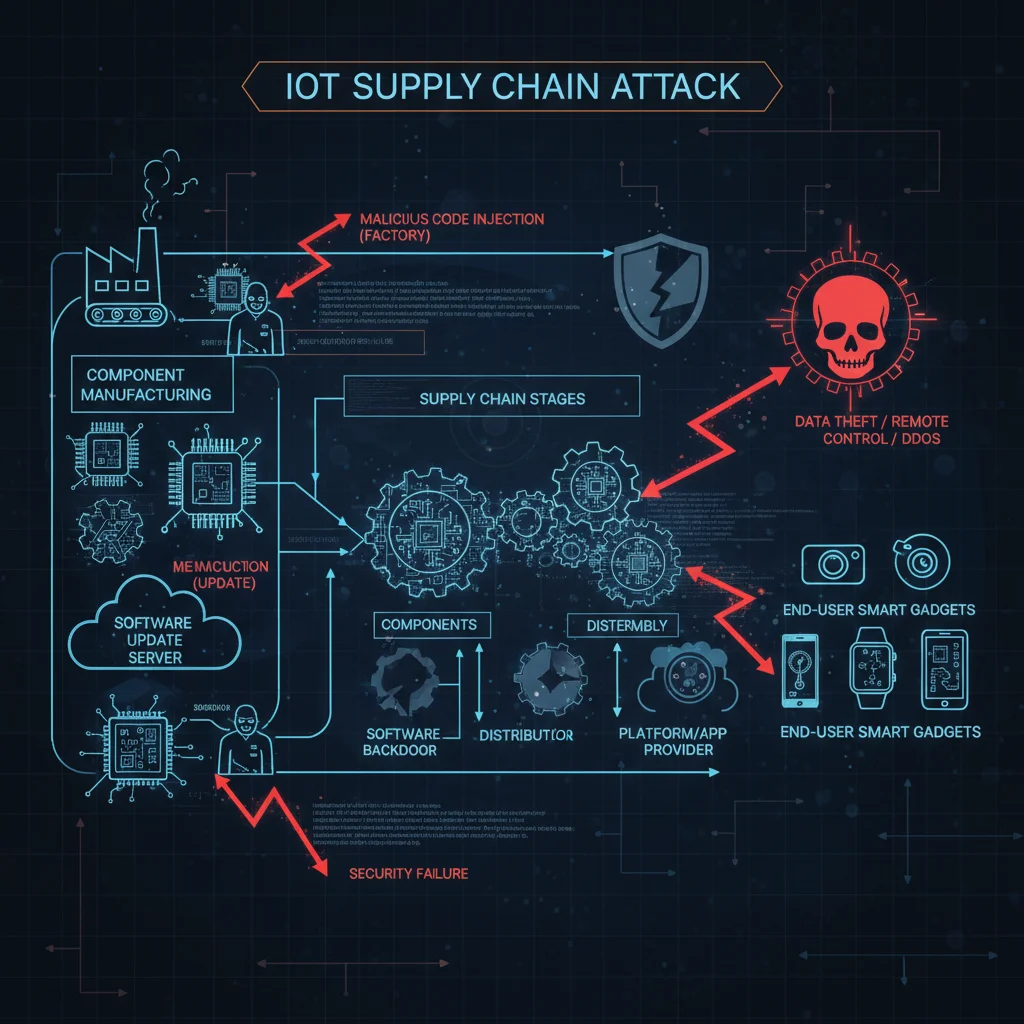
Another significant area of concern for smart gadget threats in the coming months involves firmware backdoors and sophisticated supply chain compromises. Many smart devices rely on firmware, the embedded software that controls their basic functions. If malicious code is injected into this firmware during manufacturing or through a compromised update mechanism, it can create a persistent backdoor that is extremely difficult to detect and remove. This is particularly troubling because it allows attackers to gain deep, low-level control over a device, bypassing conventional security measures.
Supply chain attacks are increasingly complex, targeting various stages of a product’s lifecycle, from design and manufacturing to distribution and updates. A compromised component from a third-party supplier, or an infected software library used in development, could introduce vulnerabilities long before a device even reaches the consumer. This makes securing the entire chain, rather than just the end product, a paramount challenge for manufacturers and a major risk for users.
The Growing Threat of AI-Powered Fuzzing for Zero-Days
The development of artificial intelligence (AI) and machine learning (ML) is not only advancing defensive cybersecurity but also empowering attackers. One particularly concerning application is AI-powered fuzzing, which is expected to accelerate the discovery of zero-day vulnerabilities in smart gadgets. Fuzzing involves feeding large amounts of malformed or unexpected data inputs to a program to make it crash or behave unexpectedly, thereby revealing bugs that can be exploited. Traditional fuzzing is effective, but AI can make it exponentially more efficient.
AI algorithms can learn from previous attempts, identify patterns in code, and intelligently generate inputs that are more likely to trigger vulnerabilities. This significantly reduces the time and effort required to find critical flaws that even seasoned security researchers might miss. For smart devices, which often have limited resources and complex, interconnected software, the rapid discovery of zero-days through AI-powered fuzzing presents a severe risk. Once a zero-day is found, it can be exploited before vendors even know it exists, leading to widespread compromise.
Exploiting Inter-Device Communication Protocols
Smart homes and IoT ecosystems thrive on devices communicating with each other, often using various wireless protocols like Wi-Fi, Bluetooth, Zigbee, and Z-Wave. While these protocols are designed with security in mind, implementations can vary, and new vulnerabilities in their specific use cases are constantly being discovered. We anticipate a surge in attacks that specifically target the inter-device communication protocols within smart gadget ecosystems. This could involve intercepting or manipulating the data flow between devices, leading to unauthorized control, data exfiltration, or disruption of services.
For example, an attacker might exploit a weakness in how a smart hub authenticates with a smart light bulb, allowing them to gain control over lighting or even other connected devices on the network. The challenge is magnified by the sheer number of different devices and manufacturers, each potentially having unique interpretations or configurations of these protocols. As more devices connect and share data, the attack surface expands, creating new opportunities for malicious actors to find weak links in the communication chain.
Mitigating Risks: Proactive Steps for Smart Gadget Security
Given these evolving smart gadget threats, proactive measures are essential for protecting your connected devices. It’s not enough to simply set up a device and forget about it; continuous vigilance and strategic practices are key. Regularly updating firmware is perhaps the most critical step, as manufacturers often release patches to address newly discovered vulnerabilities. Ignoring these updates leaves your devices exposed to known exploits. Furthermore, changing default passwords immediately upon setup is non-negotiable, as default credentials are prime targets for automated attacks.
Consider segmenting your network if possible, creating a separate Wi-Fi network specifically for your IoT devices. This can help contain any potential breaches, preventing an infected smart bulb from compromising your main computer or other sensitive devices. Being mindful of the data permissions you grant to smart device apps is also crucial. Only allow access to information that is absolutely necessary for the device’s function. By taking these steps, you build a stronger defense against the sophisticated attacks on smart gadgets.
Frequently Asked Questions
What is a side-channel attack and why is it dangerous for smart gadgets?
A side-channel attack exploits information leaked unintentionally through a device’s physical implementation, such as power consumption or electromagnetic emissions. It’s dangerous for smart gadgets because it can reveal sensitive data like encryption keys or PINs without directly breaking into software, and these attacks are often hard to detect.
How do firmware backdoors compromise smart devices?
Firmware backdoors involve malicious code embedded directly into a device’s core software during manufacturing or via a compromised update. This grants attackers deep, persistent control over the device, bypassing standard security measures and making detection and removal extremely difficult.
Can AI-powered fuzzing really find zero-day vulnerabilities faster?
Yes, AI-powered fuzzing significantly accelerates the discovery of zero-day vulnerabilities. AI algorithms can intelligently generate test inputs based on learned patterns, making them much more efficient than traditional methods at uncovering critical flaws in software before vendors are even aware of them.
What is a supply chain attack in the context of smart gadgets?
A supply chain attack targets vulnerabilities at any stage of a product’s development, manufacturing, or distribution. For smart gadgets, this could mean malicious code injected into a component by a third-party supplier or through a compromised software library used in the device’s creation, affecting the end-user product.
What is the most important step users can take to protect their smart gadgets?
The single most important step users can take is to regularly update their device’s firmware and software. These updates frequently include critical security patches that address newly discovered vulnerabilities, protecting your devices from known exploits and emerging threats.
The rapid advancement of smart gadget technology brings unparalleled convenience, but it also ushers in a new era of sophisticated cyber threats. As we’ve explored, the next six months are likely to see an increase in advanced side-channel attacks and complex supply chain compromises, specifically targeting the vulnerabilities inherent in our interconnected devices. These aren’t just theoretical risks; they represent tangible threats to our personal data, privacy, and the security of our smart environments.
Understanding these emerging attack vectors, from the subtle data leakage of side-channel attacks to the insidious nature of firmware backdoors, empowers us to better protect ourselves. The responsibility for securing our digital lives falls not only on manufacturers but also on individual users. By adopting proactive security practices, such as diligent firmware updates, strong password hygiene, and thoughtful network segmentation, we can significantly reduce our exposure to these evolving dangers. Staying informed and vigilant is our best defense in the ever-changing landscape of smart gadget threats, ensuring that the convenience of technology doesn’t come at the cost of our security.