Repair vs. Replace: Phone Over 2 Years Old? Your Guide
Struggling with an aging smartphone? This guide explores the critical decision of phone repair vs. replacement for devices over two years old. We'll help you assess factors like cost, device condition, and long-term value to make an informed choice.
By: Michael Sete on agosto 14, 2026
When your trusty smartphone, a device you’ve relied on for over two years, starts showing its age, you face a common dilemma: is it better to opt for a phone repair replacement or invest in a brand new device? This isn’t just about money; it’s about weighing functionality, environmental impact, and your personal tech needs. Deciding between a significant phone repair or a complete replacement for an older device involves careful consideration of several key factors.
Assessing the True Cost of Repair for an Older Phone
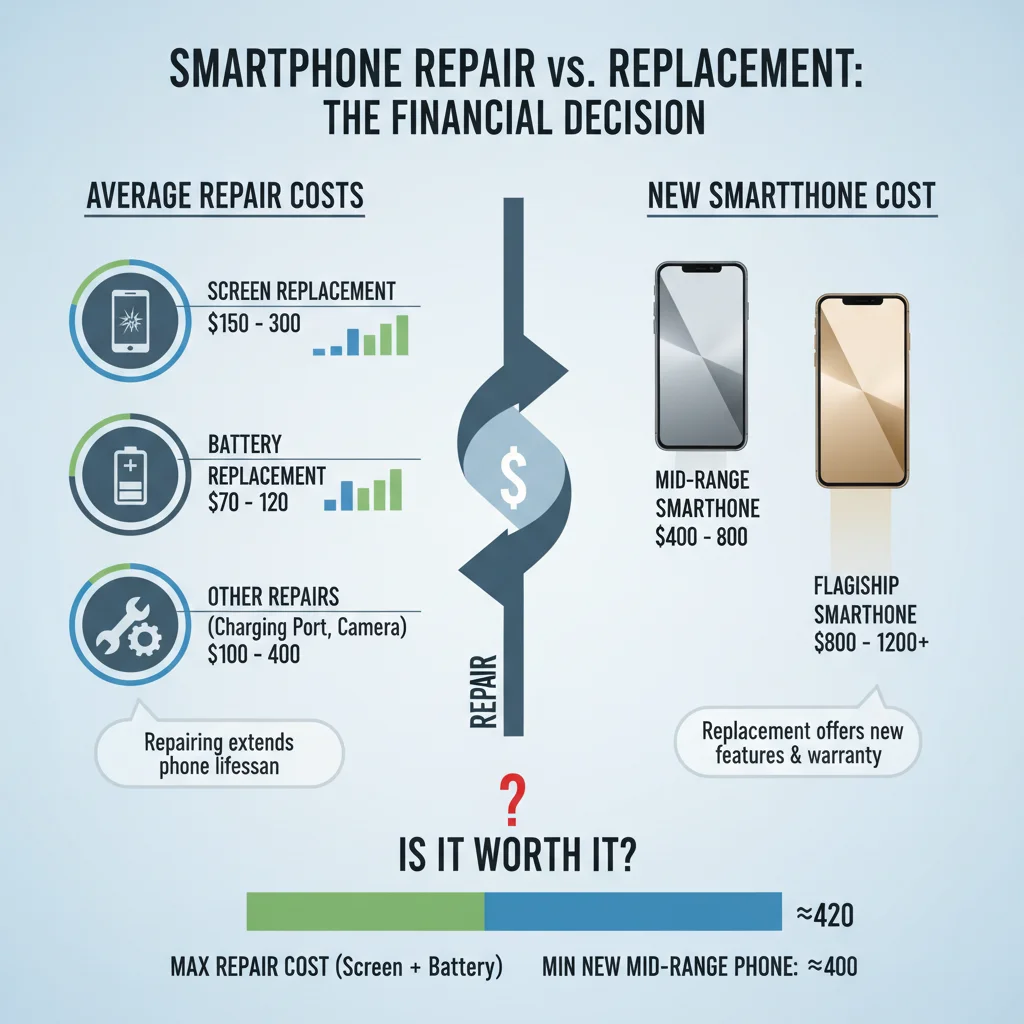
Before jumping into a repair, it’s crucial to understand the actual cost involved, especially for a phone over two years old. The price of fixing common issues like a cracked screen, a failing battery, or a malfunctioning charging port can vary widely. Sometimes, the sum of these repairs can creep close to, or even exceed, the cost of a new budget-friendly or mid-range smartphone. It’s not just the immediate repair bill, but also the potential for future issues that needs consideration. Getting quotes from reputable repair shops is a vital first step to get a clear picture.
It’s also important to factor in the potential for additional problems. An older phone might have one issue fixed, only for another to surface shortly after. This can lead to a cycle of repairs that quickly becomes more expensive than the device is worth. Always ask for a diagnostic from the repair shop to understand the full scope of potential issues, not just the one you’re currently experiencing. This comprehensive view helps in making a more informed financial decision.
Evaluating Your Device’s Overall Condition and Performance
Beyond the immediate problem, take a moment to honestly evaluate your phone’s general health and performance. Is it just a broken screen, or is the device also slow, constantly freezing, or struggling with newer apps? An older phone might have an outdated processor, limited RAM, or insufficient storage that even a perfect repair won’t address. These underlying performance issues can significantly impact your daily experience, making a repair a temporary fix for a deeper problem.
Consider the phone’s operating system and security updates. Many manufacturers stop providing software updates for devices after a certain period, typically three to five years. An outdated operating system can expose your phone to security vulnerabilities and limit compatibility with new applications. If your phone is no longer receiving these critical updates, even a costly repair might not extend its useful life in a meaningful way. This is a critical aspect when considering a phone repair replacement.
Understanding Software Support and Security Updates
One of the most overlooked aspects when deciding on phone repair vs. replacement for an older device is the availability of software support and security updates. Manufacturers typically guarantee a certain number of years for these updates, after which your device might be left behind. This isn’t just about missing out on new features; it’s primarily about security. Older operating systems become more vulnerable to malware, viruses, and hacking attempts as new threats emerge and patches are no longer released.
Without regular security updates, your personal data and privacy could be at risk. Even if your phone is physically in perfect condition after a repair, an unsupported operating system can severely limit its practical lifespan. Before investing in a repair, research your specific phone model to determine its current and projected software support timeline. This information can be a decisive factor, guiding you towards a new device if your current one is nearing its end-of-life for software support.
Key Software Support Considerations
Operating System Updates: Check if your phone still receives major OS upgrades.
Security Patches: Verify if monthly or quarterly security updates are still provided.
App Compatibility: Ensure newer applications will continue to run smoothly and securely.
Manufacturer’s Policy: Research your phone brand’s typical support lifespan.
Considering the Environmental Impact of Your Choice
The decision between phone repair replacement also carries an environmental weight. Manufacturing new smartphones requires significant resources, including precious metals and energy, and contributes to electronic waste. Repairing an existing device, whenever feasible, helps reduce this impact. By extending the life of your current phone, you’re actively participating in a more sustainable consumption model, lessening the demand for new production and delaying the disposal of electronic components.
However, this perspective needs balance. If a phone is truly at the end of its functional life, even after multiple repairs, keeping it limping along might not be the most efficient use of resources or your money. The goal is to maximize the utility of existing devices. If a repair offers a substantial extension of your phone’s life, it’s often the greener choice. If the repair is minor and the phone is otherwise fully functional, it’s almost always better to repair.
Future-Proofing Your Mobile Experience: Repair vs. Replacement
When considering a phone repair vs. replacement, think about what you need from your mobile device in the coming years. A repair might fix the immediate issue, but does it prepare you for future technological advancements? Newer phones often come with improved camera systems, faster processors, 5G connectivity, and enhanced security features that older models simply cannot offer. If your current phone struggles with modern demands, a repair might only postpone the inevitable upgrade.
For example, if you rely heavily on your phone for work, high-quality photography, or demanding applications, investing in a new device could be a more strategic move. A new phone provides a fresh start, often with a new warranty, and ensures you have access to the latest technology for several years. Conversely, if your needs are basic—calls, texts, light browsing—and the repair is affordable, extending the life of your current device can be a perfectly sensible and economical choice, especially if you prioritize saving money over cutting-edge features.
Frequently Asked Questions
Q: How do I know if my phone is too old to repair?
A: Generally, if your phone is no longer receiving software updates, or if the repair cost approaches 50-70% of a new equivalent phone, it might be too old. Also, consider if parts are readily available for your model.
Q: What are the most common repairs for older phones?
A: The most frequent repairs include battery replacement due to degradation, screen repairs for cracks, and charging port fixes. These issues often arise from normal wear and tear over time.
Q: Will repairing my old phone void its warranty?
A: Yes, generally, third-party repairs can void any remaining manufacturer’s warranty. If your phone is over two years old, it’s likely out of its original warranty period anyway, so this might not be a concern.
Q: How long can I expect a repaired older phone to last?
A: This depends on the repair and the phone’s overall condition. A new battery might give you another 1-2 years of solid use, while a screen repair on a phone with other underlying issues might only offer a few more months.
Q: Is it more environmentally friendly to repair or replace?
A: Repairing is generally more environmentally friendly as it reduces e-waste and the resources needed for new manufacturing. However, if a phone is beyond economical repair or completely unsupported, replacement might be the more practical long-term solution.
Navigating the choice between a phone repair replacement for a device over two years old is a nuanced decision that demands a balanced perspective. It’s rarely a simple yes or no answer, but rather a careful calculation of immediate costs versus long-term value. By thoroughly assessing the repair expenses, your phone’s overall performance, the availability of crucial software and security updates, and even the broader environmental implications, you can make a choice that truly aligns with your needs and budget.
Remember, a minor fix can often breathe new life into a perfectly capable device, saving you money and reducing electronic waste. However, if your phone is struggling with multiple issues, lacks essential software support, or simply can’t keep up with your daily demands, investing in a new device might offer a more reliable and future-proof solution. Take the time to gather information, weigh your options, and choose the path that offers the best blend of functionality, cost-effectiveness, and peace of mind for your mobile experience.