Edge AI Applications: Real-time Processing with 5ms Latency
Dive into the world of Edge AI Applications and understand their critical role in achieving real-time processing with minimal latency. This post covers the benefits, challenges, and future of deploying AI models at the network edge.
Por: Michael Sete em 21 de agosto de 2026
Última atualização em: agosto 24, 2026
Edge AI Applications are revolutionizing how we interact with technology, bringing powerful artificial intelligence capabilities directly to devices at the network’s edge. This shift enables real-time processing with incredibly low latency, often targeting an impressive 5ms. Imagine a world where decisions are made almost instantaneously, without the need to send data all the way to a distant cloud server and wait for a response. This is the promise of edge AI, and it’s rapidly becoming a reality across numerous industries. By processing data closer to its source, edge AI dramatically reduces delays, enhances privacy, and ensures greater operational efficiency, paving the way for truly intelligent systems.
The ability to achieve such rapid response times opens up a vast array of possibilities, from autonomous vehicles reacting to sudden obstacles to smart factories optimizing production lines in milliseconds. Understanding the core principles and deployment strategies for these advanced systems is crucial for anyone looking to leverage the next generation of AI. We will delve into what makes edge AI so impactful, explore its key benefits, and discuss the technical considerations involved in deploying models for optimal performance.
Understanding the Core Concept of Edge AI
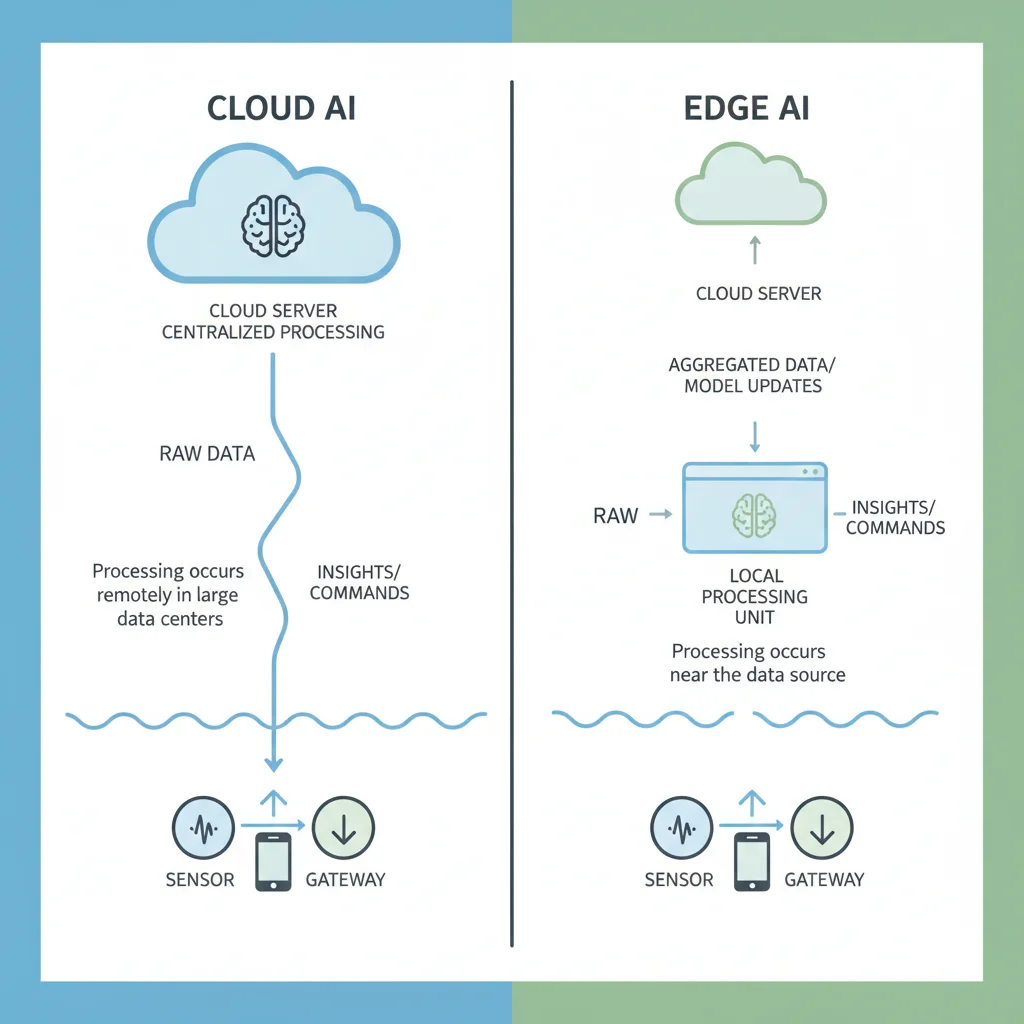
Edge AI fundamentally changes where data processing occurs. Instead of relying solely on centralized cloud servers, it pushes computational power and AI models to the ‘edge’ of the network, meaning closer to the data source. This could be a sensor, a camera, a robot, or any IoT device generating information. The primary motivation behind this architectural shift is to minimize latency, enhance data privacy, and ensure continuous operation even when network connectivity to the cloud is unreliable or absent. When data doesn’t need to travel long distances, the time it takes for AI models to analyze it and make decisions drops significantly, often into the single-digit milliseconds range.
Consider a smart surveillance camera that uses AI to detect anomalies. In a traditional cloud-based setup, the camera would capture video, send it to a remote server for analysis, and then wait for an alert. This process introduces delays. With edge AI, the camera itself, or a small device nearby, performs the AI analysis. If it detects suspicious activity, it can trigger an alarm instantly, or even activate a local response, without any noticeable lag. This localized processing is what truly defines edge AI and unlocks its potential for critical, time-sensitive applications.
The development of more powerful and energy-efficient microprocessors, combined with optimized AI algorithms, has made edge AI feasible. These specialized chips can handle complex machine learning tasks on devices with limited power and computational resources. This evolution allows for the deployment of sophisticated AI models in environments that were previously too constrained. As a result, industries are now able to implement intelligent solutions directly where they are needed most, leading to more responsive and autonomous systems across the board.
Key Benefits of Deploying AI Models at the Edge
Deploying AI models at the edge brings a multitude of advantages that are transforming various sectors. One of the most significant benefits is the drastic reduction in latency. When data is processed locally, the round-trip time to a distant cloud server is eliminated, allowing for near-instantaneous responses. This is critical for applications where even a few milliseconds of delay can have serious consequences, such as in autonomous driving or industrial automation. Achieving a 5ms latency or less means systems can react in real-time to dynamic environments, making operations safer and more efficient.
Another crucial benefit is enhanced data privacy and security. Sending sensitive data to the cloud for processing always carries inherent risks, including potential breaches or compliance issues. With edge AI, much of the raw data can be processed and analyzed locally, and only relevant, aggregated insights or alerts might be sent to the cloud. This significantly reduces the exposure of sensitive information, helping organizations meet stringent data protection regulations. It also means that less data needs to be transmitted, conserving network bandwidth and reducing associated costs.
Furthermore, edge AI provides greater operational resilience. Systems running AI models at the edge can continue to function effectively even if their connection to the central cloud is interrupted or slow. This is particularly valuable in remote locations, harsh environments, or during network outages, where continuous operation is paramount. For instance, an oil rig or a remote agricultural sensor can still perform its AI-driven tasks without constant cloud connectivity. This independence from continuous cloud access ensures higher uptime and reliability for critical applications.
Challenges in Achieving Ultra-Low Latency Edge AI
While the promise of ultra-low latency Edge AI Applications is compelling, achieving that 5ms target comes with its own set of significant challenges. One primary hurdle is the limited computational power and memory available on edge devices. Unlike powerful cloud servers, edge devices are often constrained by size, power consumption, and cost, meaning they have less processing capability. This requires highly optimized AI models and efficient inference engines that can perform complex calculations quickly without consuming too many resources. Developers must carefully balance model accuracy with computational efficiency.
Another major challenge is the complexity of deploying and managing AI models across a distributed network of edge devices. Each device might have different hardware specifications, operating systems, and network conditions. Ensuring consistent performance, updating models, and troubleshooting issues remotely can be incredibly difficult. This demands robust device management platforms and sophisticated MLOps (Machine Learning Operations) practices tailored for edge environments. The orchestration of updates and ensuring model integrity across thousands of devices is a non-trivial task.
Overcoming Technical Hurdles
Model Optimization: Techniques like model quantization, pruning, and knowledge distillation are essential to reduce model size and computational requirements without significant loss in accuracy.
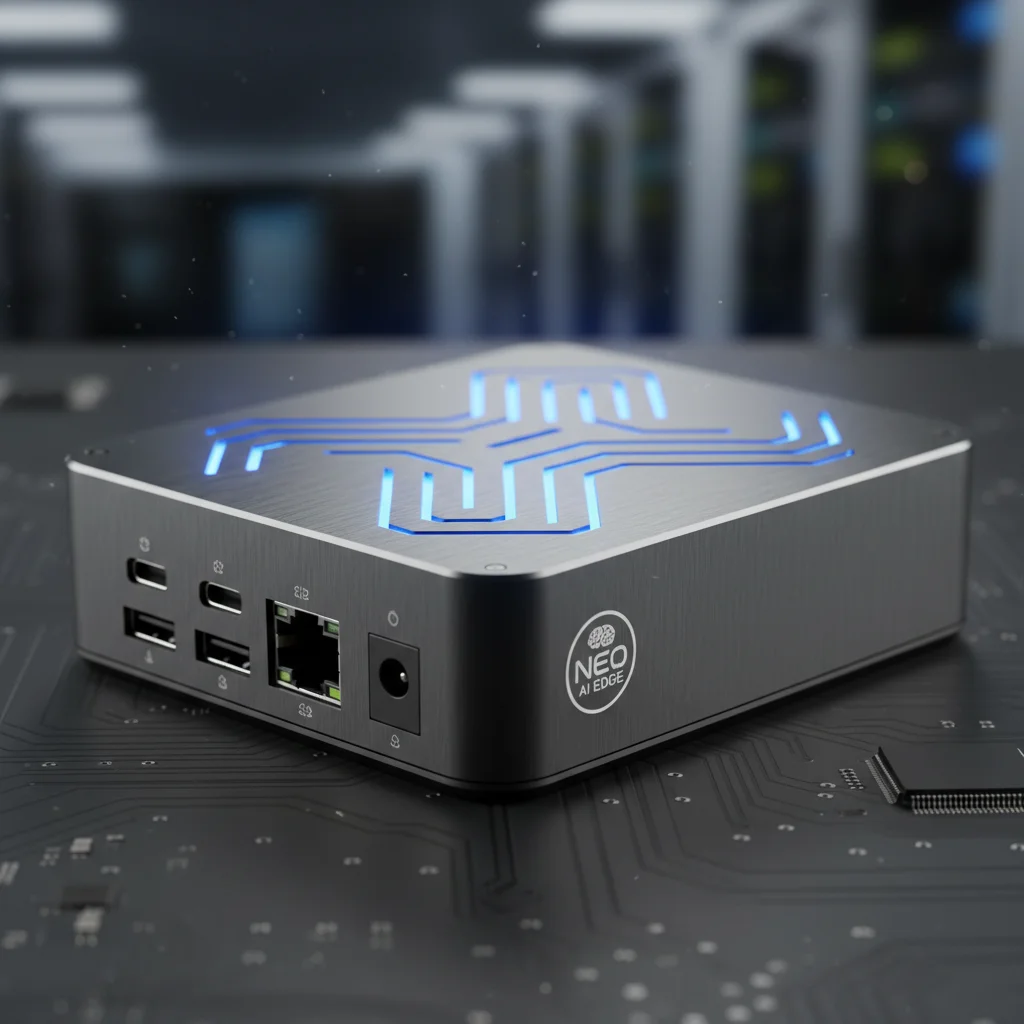
Specialized Hardware: Utilizing custom AI accelerators, such as NPUs (Neural Processing Units) or GPUs designed for edge inference, can significantly boost performance.
Efficient Data Handling: Implementing smart data filtering and aggregation at the source reduces the amount of data that needs to be processed by the AI model, minimizing load.
Robust Connectivity: While edge AI reduces reliance on constant cloud connectivity, stable local network infrastructure (e.g., 5G, Wi-Fi 6) is still crucial for device communication and model updates.
Addressing these technical challenges requires a multi-faceted approach, combining advanced software optimization with purpose-built hardware solutions. Only by tackling these complexities can we fully unlock the potential of real-time edge AI.
Real-World Edge AI Applications in Action
Edge AI Applications are already making a tangible impact across a diverse range of industries, demonstrating their power to deliver real-time insights and actions. In the manufacturing sector, edge AI is being used for predictive maintenance on machinery. Sensors on factory equipment continuously monitor vibrations, temperature, and sound. An AI model running on an edge device analyzes this data in real-time to detect anomalies that might indicate an impending failure. This allows maintenance teams to intervene proactively, preventing costly downtime and optimizing production schedules without any delay from cloud processing.
Another compelling example is in autonomous vehicles. Self-driving cars rely heavily on edge AI to process vast amounts of sensor data from cameras, lidar, and radar almost instantaneously. Decisions about braking, accelerating, or steering must be made in milliseconds to ensure safety. Sending all this data to the cloud for processing would introduce unacceptable delays. Instead, powerful edge AI processors within the vehicle analyze the environment, identify pedestrians, other vehicles, and road signs, and make critical driving decisions on the spot, achieving the necessary 5ms latency for safe operation.
In healthcare, edge AI is transforming patient monitoring. Wearable devices and smart sensors can collect vital signs and other health data. Edge AI models on these devices or local gateways can analyze this data in real-time to detect emergencies, such as a sudden fall or an irregular heartbeat, and alert caregivers instantly. This immediate detection and response can be life-saving, particularly for elderly patients or those with chronic conditions. The ability to process data locally ensures patient privacy while delivering critical, timely alerts, making healthcare more proactive and personalized.
The Future Landscape of Edge AI and Low Latency
The future of Edge AI Applications is poised for significant expansion, driven by continuous advancements in hardware, software, and connectivity. We can expect to see even more sophisticated AI models being deployed on increasingly powerful yet energy-efficient edge devices. This will enable more complex real-time decision-making in environments that were previously too challenging for localized AI. The pursuit of sub-5ms latency will continue, pushing the boundaries of what’s possible in fields like robotics, augmented reality, and critical infrastructure management, where every millisecond counts for safety and performance.
One key area of growth will be the tighter integration of edge AI with 5G and future 6G networks. The ultra-low latency and high bandwidth capabilities of these networks are perfectly complementary to edge computing. This synergy will facilitate seamless communication between edge devices, local servers, and the cloud, creating truly intelligent and responsive ecosystems. Imagine smart cities where traffic lights adapt in real-time to traffic flow, public safety systems detect incidents instantly, and smart grids optimize energy distribution with unprecedented efficiency, all powered by distributed edge AI.
Moreover, the development of more user-friendly tools and platforms for MLOps at the edge will democratize access to this technology. This means that deploying, managing, and updating AI models on a vast scale of edge devices will become less complex and more accessible for a wider range of organizations. As these tools mature, we will see an acceleration in the adoption of edge AI across small and large enterprises, leading to innovative solutions that enhance productivity, safety, and user experience. The journey towards a fully intelligent and responsive world is very much dependent on the ongoing evolution and widespread deployment of edge AI.
Frequently Asked Questions
What is the primary benefit of Edge AI over Cloud AI?
The primary benefit is significantly reduced latency, as data is processed closer to its source, eliminating the time delay of sending data to and from a distant cloud server. This enables real-time decision-making critical for many applications.
Can Edge AI completely replace Cloud AI?
No, Edge AI is not meant to completely replace Cloud AI but rather to complement it. Edge AI handles immediate, time-sensitive tasks locally, while Cloud AI can be used for training complex models, storing vast datasets, and performing less time-critical, broader analytics.
What kind of hardware is typically used for Edge AI?
Edge AI often utilizes specialized hardware such as powerful microcontrollers, embedded systems, FPGAs (Field-Programmable Gate Arrays), and NPUs (Neural Processing Units) designed for efficient AI inference with low power consumption.
How does Edge AI improve data privacy?
Edge AI improves data privacy by processing sensitive data locally on the device, reducing the need to transmit raw, personal information to the cloud. Only aggregated insights or necessary alerts may be sent, minimizing exposure and enhancing compliance.
What is the typical latency target for advanced Edge AI applications?
For many advanced and critical Edge AI applications, the typical latency target is extremely low, often aiming for 5 milliseconds or even less. This ensures near-instantaneous responses for real-time operations.
The journey into Edge AI Applications signifies a pivotal shift in how artificial intelligence is deployed and utilized, moving intelligence closer to the source of data. The relentless pursuit of ultra-low latency, particularly the 5ms benchmark, is not merely a technical challenge but a gateway to unprecedented levels of responsiveness and autonomy across various industries. From enabling safer autonomous vehicles to optimizing industrial processes and revolutionizing patient care, edge AI is proving to be an indispensable technology for real-time decision-making.
While challenges such as computational constraints and complex deployment strategies exist, ongoing innovations in hardware, software optimization, and network infrastructure are rapidly overcoming these hurdles. The symbiotic relationship between edge AI and advanced connectivity like 5G promises to unlock even more transformative applications, creating intelligent ecosystems that are both efficient and resilient. As we continue to push the boundaries of what’s possible, embracing and understanding edge AI will be crucial for anyone looking to innovate and thrive in an increasingly connected and data-driven world. The future is intelligent, distributed, and incredibly fast.