Mastering Prompt Engineering for Accurate AI Responses
Discover how to achieve significantly more accurate AI responses through advanced prompt engineering. This guide covers essential techniques, structured prompting, and iterative refinement to enhance your interactions with large language models, leading to superior outcomes.
By: Michael Sete on agosto 14, 2026
In the rapidly evolving world of artificial intelligence, achieving precise and reliable outputs from large language models (LLMs) is paramount. Mastering prompt engineering is the key to unlocking this potential, significantly boosting the accuracy of AI responses. This isn’t just about asking a question; it’s about crafting instructions so clear and comprehensive that the AI understands exactly what you need, leading to up to 90% more accurate AI responses.
Many users struggle with generic or unhelpful AI outputs, often because their prompts lack the necessary detail or structure. By understanding and applying advanced prompt engineering techniques, you can transform your interactions with AI, moving from hit-or-miss results to consistently high-quality, relevant, and precise information. This guide will walk you through the essential strategies to refine your prompts and elevate your AI experience.
Understanding the Core Principles of Effective Prompting
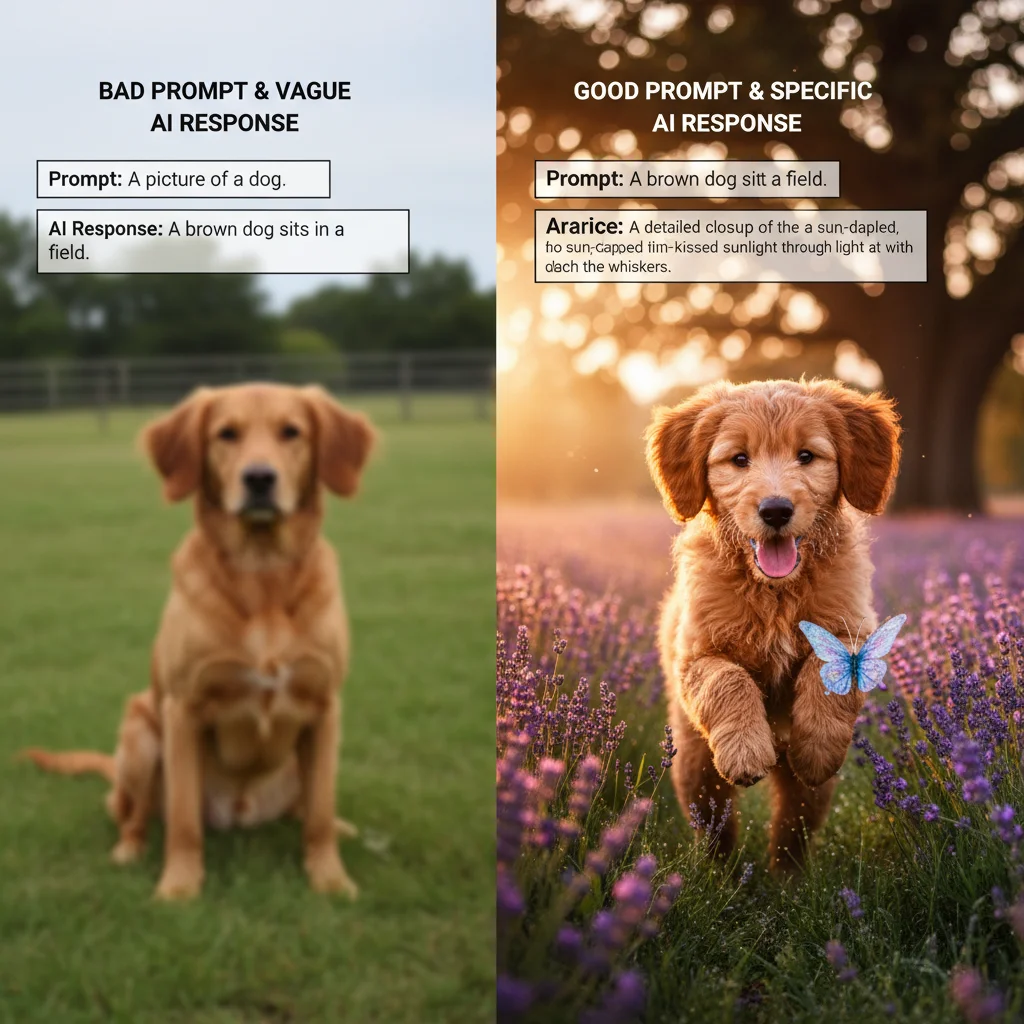
Effective prompt engineering begins with a deep understanding of how LLMs process information. They don’t ‘think’ like humans; instead, they predict the most probable next word based on their training data and the context you provide. Therefore, clarity, specificity, and constraint are your best tools. A vague prompt often leads to a vague response, as the AI tries to guess your intent, sometimes incorrectly. The goal is to minimize ambiguity and guide the AI towards the desired outcome with surgical precision.
Thinking about the AI as a highly knowledgeable but literal assistant can be helpful. It knows a vast amount, but it needs explicit instructions to apply that knowledge correctly to your specific task. Without clear boundaries or examples, it might wander off-topic or provide information that, while technically correct, isn’t what you’re looking for. This fundamental shift in perspective is crucial for improving prompt engineering accuracy.
Structuring Your Prompts for Maximum Clarity
The way you structure your prompt can dramatically influence the quality of the AI’s response. A well-structured prompt breaks down complex requests into manageable parts, guiding the AI through each step of the desired process. This often involves explicitly stating the role of the AI, the task it needs to perform, the context it should consider, and the desired format of the output. Think of it as providing a detailed brief to a human expert.
One powerful technique is to use clear delimiters, such as triple quotes or XML tags, to separate different parts of your prompt. This helps the AI distinguish between instructions, context, and examples. For instance, you might put the main instruction outside the delimiters and the text to be analyzed inside. This structured approach significantly reduces misinterpretations and helps achieve higher prompt engineering accuracy.
Key Elements for Structured Prompts:
Role Assignment: Tell the AI what persona to adopt (e.g., ‘Act as a marketing expert’).
Task Definition: Clearly state the objective (e.g., ‘Summarize the following article’).
Context Provision: Supply all necessary background information.
Output Format: Specify how the response should be structured (e.g., ‘Provide 3 bullet points’).
Constraints: Set limits on length, tone, or specific vocabulary to use or avoid.
Leveraging Examples and Few-Shot Learning
One of the most effective ways to teach an AI what you want is by showing it. This technique, known as few-shot learning, involves providing examples of input-output pairs within your prompt. When you give the AI a few examples of how a task should be performed, it can infer the underlying pattern and apply it to new, similar inputs. This is particularly useful for tasks that are nuanced or hard to describe purely with words, greatly improving prompt engineering accuracy.
For instance, if you want the AI to rephrase sentences in a specific style, provide a couple of original sentences and their desired rephrased versions. The AI will then attempt to match that style for subsequent sentences. The quality and relevance of your examples are critical; choose examples that clearly demonstrate the desired behavior and cover potential variations. Avoid contradictory or confusing examples, as these can lead to less accurate outputs.
Iterative Refinement and Feedback Loops
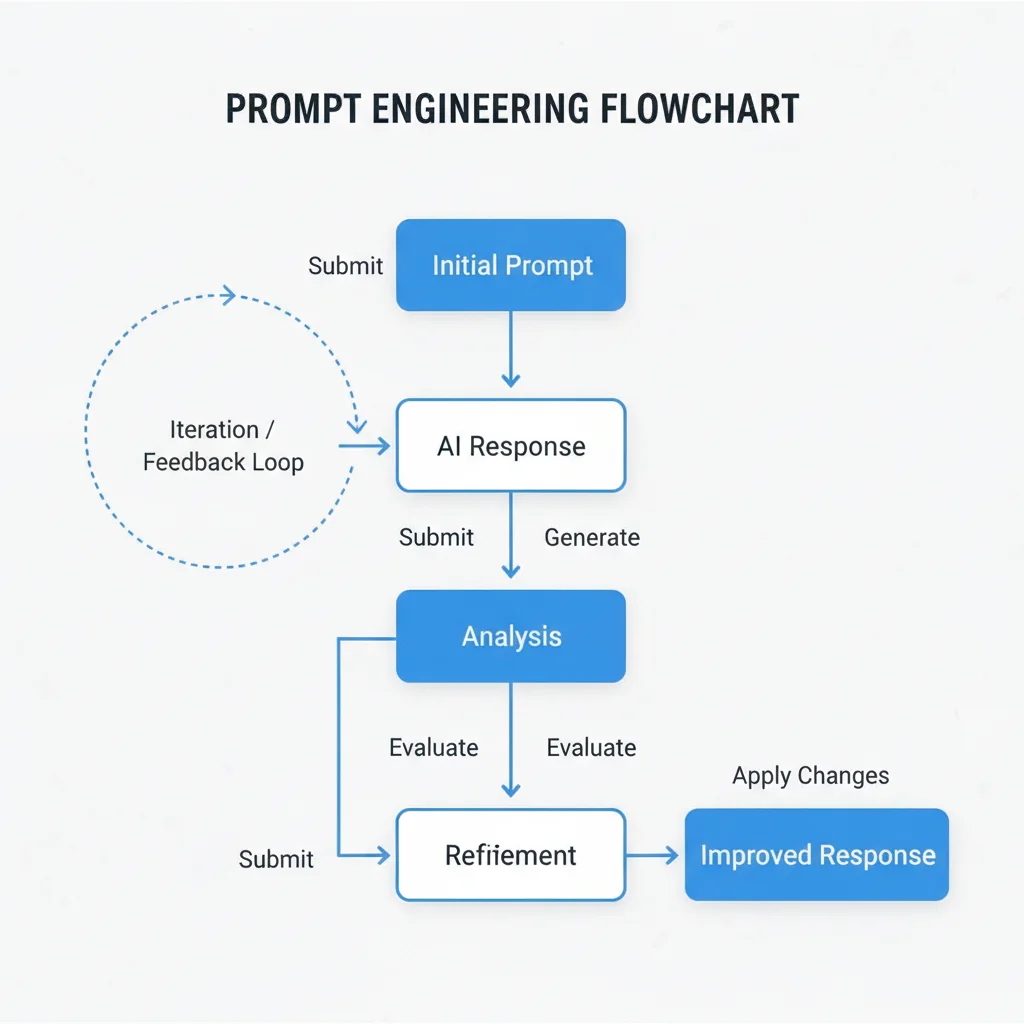
Achieving optimal prompt engineering accuracy is rarely a one-shot process. It’s an iterative journey of testing, observing, and refining. Your initial prompt might yield decent results, but rarely perfect ones. The key is to analyze the AI’s response critically, identify where it fell short, and then adjust your prompt accordingly. This feedback loop is essential for progressively improving the quality of your interactions.
When an AI response isn’t quite right, don’t just rephrase your original prompt randomly. Instead, pinpoint the exact issue. Was it too vague? Did it miss a specific constraint? Did it misinterpret a term? Based on your analysis, modify your prompt by adding more context, clarifying instructions, providing better examples, or adjusting the desired output format. Each iteration brings you closer to the desired outcome and a higher level of prompt engineering accuracy.
Advanced Techniques for Complex Tasks
For more complex tasks, advanced prompt engineering techniques can push AI accuracy even further. Chain-of-thought prompting, for example, instructs the AI to ‘think step-by-step’ before providing its final answer. This encourages the AI to break down the problem, articulate its reasoning process, and often leads to more logical and accurate conclusions, especially for multi-step problems or reasoning tasks.
Another powerful method is ‘self-correction,’ where you ask the AI to evaluate its own initial response against a set of criteria and then revise it. This meta-prompting can significantly enhance the reliability of outputs. Furthermore, combining these techniques, such as using few-shot examples within a chain-of-thought prompt, can create incredibly robust instructions for even the most challenging AI tasks, solidifying prompt engineering accuracy.
Frequently Asked Questions
What is prompt engineering?
Prompt engineering is the art and science of crafting effective instructions for artificial intelligence models, especially large language models (LLMs), to guide them toward generating desired and accurate outputs. It involves structuring queries, providing context, and specifying formats to optimize AI performance.
Why is prompt engineering important for AI accuracy?
It’s crucial because LLMs are highly dependent on the input they receive. A well-engineered prompt minimizes ambiguity, provides clear guidance, and helps the AI focus its vast knowledge to produce precise, relevant, and high-quality responses, significantly boosting accuracy.
Can anyone learn prompt engineering?
Absolutely. While advanced techniques exist, the foundational principles of clarity, specificity, and iterative refinement are accessible to anyone. With practice and experimentation, users can dramatically improve their ability to get accurate results from AI tools.
How do I know if my prompt is effective?
An effective prompt consistently yields responses that are relevant, accurate, and meet your specific requirements. If you find the AI’s answers are vague, off-topic, or require constant manual correction, your prompt likely needs further refinement and optimization.
What are some common mistakes to avoid in prompt engineering?
Common mistakes include being too vague, not providing enough context, failing to specify the desired output format, using ambiguous language, and not iterating on prompts that deliver suboptimal results. Avoiding these can greatly improve prompt engineering accuracy.
Mastering prompt engineering is no longer a niche skill but a fundamental requirement for anyone looking to harness the full power of artificial intelligence. By adopting a mindset of precision, structuring your queries thoughtfully, and continuously refining your approach, you can unlock a new level of interaction with AI models. The journey from generic outputs to 90% more accurate AI responses is entirely within your control, driven by the quality of your prompts.
The techniques discussed, from understanding core principles to leveraging advanced strategies like few-shot learning and iterative refinement, provide a robust framework for success. Embrace experimentation, learn from every AI interaction, and watch as your ability to elicit highly accurate and relevant information grows exponentially. The future of AI interaction is here, and it’s powered by thoughtful, expert prompt engineering. Start applying these strategies today and transform your AI experience.